
Study reveals genetic link between mammographic density and breast cancer
A University of Melbourne study has revealed that certain breast cancer genetic variants increase mammographic density, confirming the link between mammographic breast density and breast cancer.
Professor John Hopper of the University’s School of Population Health says women vary greatly in their underlying risk of breast cancer. “These findings provide an insight into possible new pathways into the development of breast cancer.”
“We hope our research on mammographic density will eventually help identify women at higher risk of getting breast cancer. That is still a way off, but for now women should follow national guidelines for screening,” he says.
The research was conducted in the University’s School of Population Health and Department of Pathology along with key national and international collaborators. The paper was published today in the prestigious international journal Cancer Research.
“Previous twin studies have suggested there is a genetic link between mammographic density and breast cancer. For the first time, we have been able to identify some of the breast cancer genetic variants involved.”
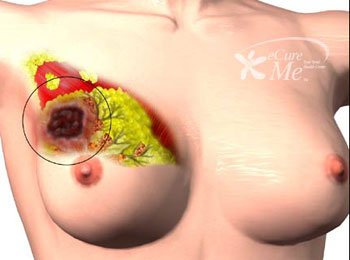 The amount of light areas on a mammogram reveals the mammographic density of a woman’s breast. Women who have high mammographic density for their age are at an increased risk of breast cancer.
Using mammograms and blood samples from a study of 830 twin pairs and 600 of their sisters aged between 30 and 80 years recruited via the Australian Twin Registry, researchers investigated 12 genetic variants which are known to be associated with breast cancer.
 Dr Jennifer Stone, who led the measurement of mammographic density, says, “We aimed to determine if these genetic variants associated with breast cancer risk also influenced mammographic density. We found at least two variants were linked.”
“To date, three other studies had examined this question but have not provided a convincing answer.”
“Finding that several genetic variants associated with breast cancer genes are also associated with mammographic density could help explain some of the biological reasons why women of the same age differ so much in mammographic density,” Professor Hopper says.
“In doing so, it could also help unravel how these genetic variants are associated with breast cancer risk. This is the beginning of a new research focus on how cancers begin and the role mammographic density plays.”
 The research was conducted in collaboration with BreastScreen services across Australia, the Australian Twin Registry and the Cancer Council Victoria, and supported by the National Breast Cancer Foundation, Cancer Australia, the Victorian Breast Cancer Research Consortium and the National Health and Medical Research Council.
“This work also builds on long term collaborations with Professor Norman Boyd of the Campbell Family Institute for Breast Cancer Research and Dr Martin Yaffe from the Sunnybrook Hospital, both in Toronto, Canada,” Professor Hopper says.
The researchers will now undertake a pooled international study to identify more genetic variants that are linked to mammographic density and breast cancer
Currently, BreastScreen Victoria recommends women aged 50 to 69 years have a screening mammogram every two years.
###
Contact: Rebecca Scott
.(JavaScript must be enabled to view this email address)
61-383-440-181
University of Melbourne