Researchers at Uppsala University, in collaboration with colleagues in Sweden and abroad, have identified an entirely new mechanism by which a specific protein in the body…
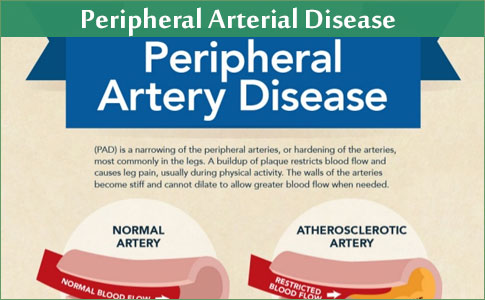
Peripheral arterial disease (PAD) involves the atherosclerotic occlusion of the arterial circulation to the lower extremities. The disease may be asymptomatic (identified only by a reduced blood pressure in the ankle), or it may manifest symptoms of intermittent claudication or severe chronic leg ischemia. The typical patient with PAD presents a decade later than the patient with coronary artery disease and experiences a profound limitation in exercise capacity and quality of life.
In addition to affecting the limbs, PAD is a manifestation of systemic atherosclerosis affecting other major circulations involving the cerebral and coronary circulations. Thus, all patients with PAD are at an increased risk of cardiovascular morbidity and mortality. The treatment goals are directed at providing symptom relief and at reducing the risk of systemic cardiovascular morbidity and mortality ... more » »
Raynaud's syndrome is an episodic vasospastic disorder characterized by digital color change (white-blue-red) with exposure to cold environment or emotional stress.
If idiopathic, it is called Raynaud's disease. If associated with a possible precipitating systemic or regional disorder (autoimmune diseases, myeloproliferative disorders, multiple myeloma, cryoglobulinemia, myxedema, macroglobulinemia, or arterial occlusive disease), it is called Raynaud’s phenomenon ... more » »
Even one cigarette has serious adverse effects on young adults, according to research presented by Dr. Stella Daskalopoulou at the Canadian Cardiovascular Congress 2009, co-hosted by the Heart and Stroke Foundation and the Canadian Cardiovascular Society.
Researchers have identified that Rituxan, a drug previously approved for the treatment of non-Hodgkin’s B cell lymphoma and rheumatoid arthritis, can treat severe ANCA-associated vasculitis as effectively as cyclophosphamide, the current standard therapy. The news will be presented…
Researchers from Boston University School of Medicine (BUSM) have concluded that the 940nm wavelength laser is superior for treating facial spider veins (telangiectasias) as compared to the 532nm wavelength laser. The findings, which appear in the recent issue…
Deep Venous Thrombosis (DVT) is a serious condition that involves the formation of a blood clot inside of a deep vein usually in the legs. A patient with DVT is typically treated with anticoagulants (blood thinners) however researchers…