
Vitamins and Minerals - Medical Nutrition Treatment in the Management of Type 2 Diabetes
Individuals with diabetes should be advised about the importance of acquiring daily vitamin and mineral requirements from natural food sources. Regular consumption of a variety of vegetables, fresh fruit (five or more servings of vegetables or fruits per day), legumes, low-fat milk, vegetable oils, nuts, whole-grain breads, and oily fish should be encouraged to ensure that recommended intakes are met (8,14).
On the other hand, people with diabetes should be advised to restrict salt intake to under 6 g/day, particularly when elevated blood pressure is a problem.
Persons with diabetes may have increased oxidative stress, there has therefore been interest in recommending intake of antioxidant vitamins.
However, placebo-controlled trials have failed to show a clear benefit from antioxidant supplementation and, in some cases, adverse effects have been suggested e.g., for beta-carotene supplements (14).
The role of folate supplementation in reducing cardiovascular events is still under further investigation. Vitamin and mineral supplementation in pharmacological dosages should be viewed as a therapeutic intervention, and recommended only in case of proven deficiencies (6,8).
There is no clear evidence of benefit from vitamin or mineral supplementation in people who do not have underlying deficiencies. Evaluation of the micronutrient status of a person with type 2 diabetes begins with a careful dietary history, as laboratory evaluation is often confounded by methodological problems.
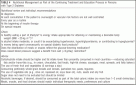
TABLE 4 Nutritional Management as Part of the Continuing Treatment and Education Process in Persons with Type 2 Diabetes
Nutritional review and individual recommendations
At diagnosis
At each consultation if the patient is overweight or vascular risk factors are not well controlled
Every year as a routine
At the beginning of insulin therapy
On special request
Check
Is healthy eating a part of lifestyle? Is energy intake appropriate for attaining or maintaining a desirable body weight (BMI
- 2
)?Is alcohol intake moderate, or could it be exacerbating hypertension, hypertriglyceridemia, or contributing to hypoglycemia?
Is money being spent unnecessarily on special diabetic food products?
Does the distribution of meals or snacks reflect the glucose-lowering medication?
Does raised blood pressure suggest a benefit from salt (
< 6 g/day) restriction?
Advise
Carbohydrate intake should be higher and fat intake lower than presently consumed in most countries - - reducing saturated fats and/or trans-fats (e.g., in cream, chocolates, fast foods, high-fat cheese, sausages, meat, spreads, and fatty bakery)
The use of fresh fruit and vegetables (5 servings a day)
Consuming preferably whole-grain breads and cereals, parboiled rice, pasta, legumes
The use of vegetable oils (e.g., olive oil, rapeseed oil, soya bean oil), nuts, seeds and oily fish
Sugar does not need to be excluded but should be limited
Alcoholic beverages, if desired, should be consumed as part of the total caloric intake (no more than 1 - 2 small drinks/day)
Meals, snacks, and food choices should match individual therapeutic needs, preferences and culture
 However, measurements of serum folate, vitamin B12, vitamin D, calcium, potassium, magnesium, and iron concentrations may be clinically useful to define micronutrient deficiencies (14).
Monika Toeller
German Diabetes Research Center, Heinrich-Heine University, Düsseldorf, Germany
Jim I. Mann
Department of Human Nutrition, University of Otago, Dunedin, New Zealand
REFERENCES