
Fat Modification - Medical Nutrition Treatment in the Management of Type 2 Diabetes
The primary goal regarding dietary fat intake in individuals with type 2 diabetes is to decrease intake of saturated fatty acids. Compared with the nondiabetic population, persons with diabetes have an increased risk of cardiovascular disease and the intake of saturated fat is already undesirably high in most countries with a western way of life. To assist in achieving optimal low-density lipoprotein (LDL)-cholesterol levels (< 100 mg dL
- 1) it is recommended that the intake of saturated fatty acids plus trans-unsaturated fatty acids be limited to no more than 10% of total energy intake, and the amount of dietary cholesterol to < 300 mg/day. In patients with elevated LDL-cholesterol, a further reduction of saturated fat to < 7%, and of dietary cholesterol to < 200 mg/day, have been recommended for nondiabetics with dyslipidemia. Although specific studies in persons with diabetes are not available to conclusively demonstrate the effects of these limits, the goals for patients with diabetes remain the same as for other high-risk groups (Table 3).
For those on weight-maintaining diets, the debate has focused on what is the best energy source alternative to saturated fat. Several studies suggest that saturated fat could be replaced by carbohydrate food rich in fiber and/or by cis-monounsaturated fatty acids (6,7,57). Diets high in cis-mono-unsaturated fatty acids, or low in fat and high in fiber-rich carbohydrate result in improvements in glycemia and lipid levels compared with diets high in saturated fat.
Controversial results have been reported from the few studies that evaluated the effects of polyunsaturated fat and glycemic control and serum lipid levels in persons with type 2 diabetes. It is currently recommended that intake should be < 10% of total energy, based upon the potential adverse consequences of increased lipid oxidation and reduced levels of high-density lipoprotein associated with high intakes (8,9).
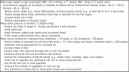 TABLE 3 Dietary Modifications to Reduce Cardiovascular Risk Factors in Type 2 Diabetes
N - 3 polyunsaturated fat (omega-3 fatty acids) has the potential to reduce serum triglyceride levels, particularly in persons with hypertriglyceridemia, and to have beneficial effects on platelet aggregation and thrombogenicity (58). Although studies of the effects of n - 3 fatty acids in patients with diabetes have primarily used fish-oil supplements, there is evidence from the general population that foods containing n - 3 fatty acids have cardioprotective effects. Food sources of n - 3 polyunsaturated fat include fatty fish and plant sources, such as rapeseed oil, soya bean oil, and nuts. The consumption of at least 2 - 3 helpings of oily fish each week will contribute to ensuring an adequate intake of n - 3 fatty acids (6,8,11).
Trans-unsaturated fatty acids are produced during the hydrogenation of unsaturated fats and are found in many manufactured products, such as biscuits, cakes, confectionery, soups, and some margarines. When studied independently of other fatty acids the effect of trans-fatty acids is similar to that of saturated fats in raising LDL-cholesterol. The intake of trans-fatty acids therefore should be minimized (7,8).
Monika Toeller
German Diabetes Research Center, Heinrich-Heine University, Düsseldorf, Germany
Jim I. Mann
Department of Human Nutrition, University of Otago, Dunedin, New Zealand
REFERENCES