
Quarter of stroke patients die within a year: study
One in four people who have a stroke will likely die within one year from any cause and 8 percent who have a stroke will have another one soon, U.S. researchers said on Monday.
The risks were higher for African-Americans compared to whites and increased with age and the number of other ailments stroke patients had, the researchers wrote in the journal Neurology.
Dr Wuwei Feng of the Medical University of South Carolina in Charleston and colleagues studied records of 10,399 hospital patients in the state who had a stroke in 2002.
The average age of the patients was 69.
Feng’s team found that 25 percent of people who had a stroke died within a year and 8 percent had another stroke within a year. They said 50 percent either died or had another stroke or a heart attack within four years.
The risk of heart attack jumped by 14 percent for every 10-year increase in age, and blacks were 16 percent more likely to have another stroke than whites, the study found.
 “We tried to quantify the short-term and long-term risk of recurrent stroke, heart attack and deaths after initial stroke in the whole state,” Feng said in a telephone interview.
He said they are not sure of the underlying reasons behind the high risks in South Carolina, in the heart of the U.S. “stroke belt” - a dozen states in the southeast with high stroke rates, according to the U.S. Centers for Disease Control and Prevention.
But he said the study was large enough and comprehensive enough for the results to apply to the United States as a whole, and he said the study supports other, smaller studies done elsewhere.
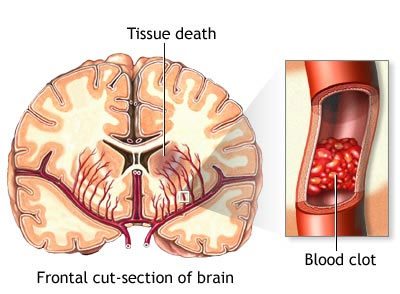 A stroke occurs when a clot blocks the blood supply to the brain or when a blood vessel in the brain bursts.
High blood pressure, heart disease, diabetes, smoking and a prior stroke are the biggest risk factors for stroke, the third leading cause of death in the United States, according to the CDC.
“The findings suggest that South Carolina, and possibly other parts of the United States, probably have a long way to go in terms of preventing or reducing the risk factors for recurrent strokes,” Feng said.
Feng said a neurological evaluation, proper medication and taking drugs as prescribed can help. But he said more study is needed to come up with an effective approach for preventing stroke.
Stroke will cost the United States about $74 billion in 2010, including the cost of healthcare services, drugs and lost productivity, the CDC estimates.
SOURCE: Neurology, February 16, 2010.