
Ginkgo herbal medicines may increase seizures in people with epilepsy
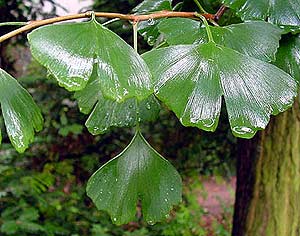
Restrictions should be placed on the use of Ginkgo biloba (G. biloba) — a top-selling herbal remedy — because of growing scientific evidence that Ginkgo may increase the risk of seizures in people with epilepsy and could reduce the effectiveness of anti-seizure drugs, a new report concludes. The article appears in ACS’ monthly Journal of Natural Products. It also suggests that Ginkgo may have harmful effects in other people after eating raw or roasted Ginkgo seed or drinking tea prepared from Ginkgo leaves.
Eckhard Leistner and Christel Drewke note that consumers use pills, teas, and other products prepared from leaves of the Ginkgo tree to treat a wide array of health problems. Those include Alzheimer’s disease and other memory loss, clinical depression, headache, irritable bladder, alcohol abuse, blockages in blood vessels, poor concentration, and dizziness. Scientific concern focuses mainly on one chemical compound in the herb. It is a potentially toxic material known as ginkgotoxin.
They reviewed scientific research on Ginkgo, and found 10 reports indicating that patients with epilepsy who take Ginkgo products face an increased risk of seizures. They note that laboratory studies explain how Ginkgo could have that unwanted effect.
Ginkgotoxin seems to alter a chemical signaling pathway in ways that may trigger epileptic seizures. Further evidence showed that Ginkgo can interact with anti-seizure medications and reduce their effectiveness. “Contrary to our own previous assumption, we are now convinced, however, that G. biloba medications and other products can have a detrimental effect on a person’s health condition,” the report concludes.
 “It is therefore important that the large number of G. biloba product users and their health care providers be made aware of these risks, in order to enable them to make informed decisions about the use of these preparations.”
###
ARTICLE FOR IMMEDIATE RELEASE
“Ginkgo biloba and Ginkgotoxin”
CONTACT:
Eckhard Leistner, Ph.D.
Institut für Pharmazeutische Biologie
Rheinische Friedrich-Wilhelms-Universität
Bonn, Germany
Phone: 0049 228 733199
Fax: 0049 228 733250
Email: .(JavaScript must be enabled to view this email address)
Contact: Michael Bernstein
.(JavaScript must be enabled to view this email address)
202-872-6042
American Chemical Society