
Impact of timing on carotid artery stenting after stroke or transient ischemic attack
A recent study found no significant difference in the outcome for patients who received carotid artery stenting (CAS) at more than 30 days post-transient ischemic attack (TIA) or stroke versus those who received CAS at 30 days or less post-event.
Surgical literature recommends that the removal of plaque from the carotid artery take place within 14 days of a TIA or stroke for the best outcomes. However, little is known about the optimal timing of carotid artery stenting for these patients.
Nicholas J. Ruggiero, II, M.D., F.A.C.C., F.S.C.A.I., F.S.V.M., director of Structural Heart Disease and Non-Coronary Interventions at the Jefferson Heart Institute and assistant professor of Medicine, Jefferson Medical College of Thomas Jefferson University, led a multi-site team of researchers who attempted to uncover the optimal timing for carotid artery stenting after TIA or stroke. He will present their abstract at the American Heart Association annual meeting on November 14 at 9:30 AM in Orlando, FL.
“We hope for the results of this study to serve as a guide for the appropriate timing and use for CAS,” said Ruggiero.
The team retrospectively evaluated 899 symptomatic patients in the NCDR CARE (R) Registry who underwent CAS from January 2005 to February 2011. They compared baseline characteristics, including procedural, in-hospital and 30-day events, including TIA, stroke, heart attack or neurologic death.
 Of the 899 patients, 614 received CAS at 30 days or less post-event and 285 at more than 30 days. The demographics of each patient population were evenly matched, except for higher a prevalence of smoking, abnormal lipid levels, COPD, and use of clopidogrel (Plavix) in the group that received CAS at greater than 30 days, and a higher occurrence of hemodialysis in the 30 days or less group.
What is carotid angioplasty and stenting?
Carotid angioplasty is a non-surgical procedure performed after the diagnostic angiogram. The carotid angioplasty procedure can be performed the same day as the diagnostic angiogram or days or weeks after the angiogram.
During angioplasty, a balloon catheter is guided to the area of the blockage or narrowing. When the balloon is inflated, the fatty plaque or blockage is compressed against the artery walls to improve blood flow.
During the angioplasty procedure, a carotid stent (a small, metal mesh tube) is placed inside the carotid artery at the site of the blockage and provides support to keep the artery open.
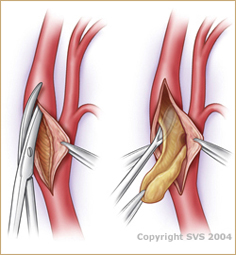
For patients who meet certain eligibility criteria, carotid stenting offers a less invasive approach than carotid endarterectomy, the traditional surgical treatment for carotid artery blockages. Carotid stenting can be performed while the patient is awake, reducing recovery time.
“This study suggests that the optimal timing of CAS in symptomatic patients can be individualized and performed safely, but further studies are necessary to substantiate this,” said Ruggiero.
###
Co-authors on the study include: Brian G. Hynes, Massachusetts General Hospital; Kevin F. Kennedy, St. Lukes Mid American Heart Institute, Kansas City; Joseph M. Garasic and Kenneth Rosenfield, Massachusetts General Hospital.
About Thomas Jefferson University Hospitals
Thomas Jefferson University Hospitals (TJUH) are dedicated to excellence in patient care, patient safety and the quality of the healthcare experience. Consistently ranked by U.S. News & World Report among the nation’s top hospitals, Thomas Jefferson University Hospital, established in 1825, has over 900 licensed acute care beds with major programs in a wide range of clinical specialties. TJUH is one of the few hospitals in the U.S. that is both a Level 1 Trauma Center and a federally-designated regional spinal cord injury center. TJUH patient care facilities include Jefferson Hospital for Neuroscience, the region’s only dedicated hospital for neuroscience, Methodist Hospital in South Philadelphia, and additional patient care facilities throughout Pennsylvania and New Jersey. TJUH partners with its education affiliate, Thomas Jefferson University.
Lee-Ann Landis
.(JavaScript must be enabled to view this email address)
215-459-2092
Thomas Jefferson University