
Changing Epidemiology of Obesity – Implications for Diabetes
Introduction
It is clear that there is a global epidemic of obesity (World Health Organization, 2000) and the implications for diabetes of this epidemic are now starting to be realized (Mokdad et al., 2003). A large number of co-morbidities are associated with obesity, but it is type 2 diabetes that is most closely linked with increasing adiposity (Willett et al., 1999) and even within the normal weight range diabetes prevalence begins to rise with increasing adiposity (Chan et al., 1994; Colditz et al., 1995). There are currently about 110 million patients with diabetes on a worldwide basis, with this number projected to increase to 180 million by 2010 (King et al., 1998). Being overweight or obese with an abdominal fat distribution probably accounts for 80–90 per cent of all patients with type 2 diabetes (Astrup and Finer, 2000).
Assessment of obesity in epidemiological studies
Most current epidemiological studies of body weight use body mass index (BMI) to define degrees of obesity. BMI is calculated as the subject’s weight in kilograms divided by the square of their height in metres (kg m-2). Cut-offs for underweight, normal weight, overweight and obesity are shown in Table 1.1.
Table 1.1 World Health Organization classification of obesity 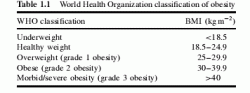
BMI correlates well with total adiposity (Webster et al., 1984) and with morbidity and mortality from many diseases (Willett et al., 1999), although for a number of co-morbidities, including type 2 diabetes, the relationship is closer with abdominal body fat distribution than total body fat (Ohlson et al., 1985). In epidemiological studies intra-abdominal fat is most commonly estimated using measurements of waist and hip circumference and these can be used to identify increased risk of diabetes and other cardiovascular risk factors (Han et al., 1995).
Anthony H. Barnett
Department of Medicine, University of Birmingham and Birmingham Heartlands and Solihull NHS Trust (Teaching), UK
Sudhesh Kumar
Professor of Medicine, Diabetes & Metabolism, Warwick Medical School, University of Warwick, UK