
What Medications May Help My Child?
Whether your child may benefit from psychiatric medication warrants close evaluation by her primary care physician or a psychopharmacologist (a psychiatrist who specializes in medication).
Thus far, most research on the use of psychiatric medications for eating disorders has been conducted on adults. Many medications that the U.S. Food and Drug Administration (FDA) has approved for the treatment of anxiety and depression are now prescribed for individuals with eating disorders. Having said that, we want you to understand that there are no magic bullets; that is, no drug has proven consistently effective in the treatment of these disorders.
One of the most promising developments involves the role of antidepressants in individuals with bulimia nervosa. Chances are you associate antidepressants with their mood-lifting ability; what you may not know is that these medications can also serve other functions. For example, many people with bulimia who have taken an antidepressant have reported that it helped them cut down on their binge eating episodes. The selective serotonin reuptake inhibitors (SSRIs) tend to be tolerated better and result in fewer problems than the older generations of antidepressants and are most frequently prescribed for bulimia. More research is needed to determine how SSRIs and other antidepressants reduce binge frequency. It is likely that a multitude of factors play a role.
A number of chemicals in the brain impact eating. Some of them (such as serotonin, dopamine, and norepinephrine) are known as neurotransmitters, and their function is to transport information between brain cells. Research shows that people with eating disorders tend to have an imbalance in the neurotransmitter serotonin, which influences mood, anxiety, and the sensation that one has eaten enough. Normally, after serotonin delivers a message, it travels back to the brain cell from which it came. An SSRI blocks this reuptake (return passage), keeping more serotonin active in the system to make up for what the patient may not be producing on her own.
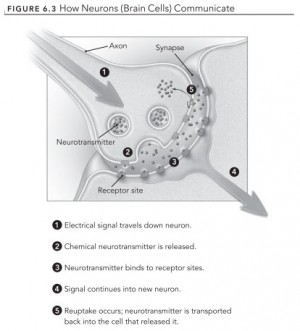 FIGURE 6.3 How Neurons (Brain Cells) Communicate
- Electrical signal travels down neuron.
- Chemical neurotransmitter is released.
- Neurotransmitter binds to receptor sites.
- Signal continues into new neuron.
- Reuptake occurs; neurotransmitter is transported back into the cell that released it.
Among the SSRIs is the well-known Prozac (fluoxetine), the only medication approved by the FDA for the treatment of bulimia nervosa. Individuals taking Prozac often do well on 60 milligrams per day, which is higher than the dose typically prescribed for the treatment of depression. If your child’s doctor recommends an SSRI, he or she will probably start her on a small dose and increase it gradually while monitoring her response. The helpful effects of SSRIs tend to kick in by about six weeks.
SSRIs tend to ease the mood problems and anxiety that often accompany bulimia. Of her experience on this type of drug, our patient Tara, now 24, reports, “I started treatment as a college senior. About seven weeks into outpatient psychotherapy, my team of health providers suggested that I start an SSRI. I wasn’t enthused about the idea of medication, but I figured I had nothing to lose. The first effect I noticed was a small but growing improvement in my overall wretchedness. In time, I became better able to bounce back from emotional upsets and to roll with the punches of everyday life. The combination of therapy and medication helped me binge and purge less frequently; but I have still not been able to stop those behaviors completely.”
Like Tara, many patients with bulimia do well when receiving both antidepressant medication and psychotherapy. In general, SSRIs are very well tolerated. “I didn’t have any negative effects,” says Tara. Alternatives to SSRIs include a number of other antidepressants (such as Effexor, generic name venlafaxine) that can help patients manage anxiety, excessive activity, or idiosyncratic thoughts. Regardless of which antidepressant is prescribed for your child, she’ll be professionally monitored, not only while she’s initially adjusting to the medication, but for as long as she’s on it. If her doctor starts her on one antidepressant and it doesn’t “work,” he or she may recommend that she switch to another from either the same class or a different one. She may need to try several drugs before finding an effective one. The dose of antidepressant required varies. While taking medication, your child should avoid drinking alcohol.