
Low-income Urban Mothers Have High Rate of Postpartum Depression
More than half of low-income urban mothers met the criteria for a diagnosis of depression at some point between two weeks and 14 months after giving birth, according to a study led by University of Rochester Medical Center researchers and published online by the journal Pediatrics.
This is the first study to describe the prevalence of depression among low-income urban mothers, who were attending well-child care visits, through the use of a diagnostic interview. It also is the first study of this population group to test the accuracy of three depression screening tools routinely used by physicians.
The screening tools have high accuracy in identifying depression, the researchers concluded, but cutoff scores may need to be altered to identify depression more accurately among low-income urban mothers.
The study involved 198 mothers who were 18 years of age or older and whose children were no older than 14 months. The mothers attended well-child visits at the outpatient pediatric clinic at Golisano Children’s Hospital at the Medical Center.
The researchers found that 56 percent of the mothers, after a diagnostic interview, met the criteria for a diagnosis of a major or minor depressive disorder.
 “This is an unexpected, very high proportion to meet diagnostic criteria for depression,” said Linda H. Chaudron, M.D., associate professor of Psychology, Pediatrics and of Obstetrics and Gynecology. “This may be a group at high risk for depression. The message of this study is that pediatricians and other clinicians who work with low-income urban mothers have multiple screening tools that are easy to use and accurate. These tools can help clinicians identify mothers with depression so they can be referred for help.”
Many women experience the so-called “baby blues.” When the feelings persist or worsen it may be clinical depression. The symptoms include insomnia, persistent sadness, lack of interest in nearly all activity, anxiety, change in appetite, persistent feelings of guilt, and thoughts of harming oneself or the baby. Postpartum depression affects up to 14 percent of new mothers in the United States, with higher rates among poor and minority women.
The researchers evaluated three screening tools, the Edinburgh Postnatal Depression Scale, the Beck Depression Inventory II and the Postpartum Depression Screening Scale, using the diagnostic interviews for validation.
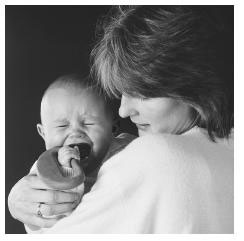 The three screening tools have been evaluated in many populations, but one of the reasons the study was done was to test the tools with a group for whom there is not much data—low-income women, especially African-American women, Chaudron said. The researchers also evaluated the validity of the screening tools at various times during the postpartum year.
“The screening tools are valid when used anytime during the postpartum year,” Chaudron said.
Use of traditional cutoff scores may not be as accurate as previously thought. Clinicians should be aware that scores two or three points below traditional cutoff scores may indicate a need for further evaluation, the researchers concluded.
The study was funded by a grant from the National Institute of Mental Health.
In addition to Chaudron, the authors of the article included: Peter G. Szilagyi, M.D., M.P.H., professor of Pediatrics; Wan Tang, Ph.D., research assistant professor of Biostatistics and Computational Biology; Elizabeth Anson, M.S., of the University of Rochester School of Nursing; Nancy L. Talbot, Ph.D., associate professor of Psychiatry; Holly I.M. Wadkins, M.A., of the Department of Psychiatry; Xin Tu, Ph.D., professor of Biostatistics and Psychiatry; and Katherine L. Wisner, M.D., M.S., professor of Psychiatry, Obstetrics and Gynecology and of Epidemiology, University of Pittsburgh School of Medicine.
Michael Wentzel
(585) 275-1309
Email Michael Wentzel