
Long-Time Cannabis Use Associated With Psychosis
Young adults who have used cannabis or marijuana for a longer period of time appear more likely to have hallucinations or delusions or to meet criteria for psychosis, according to a report posted online today that will appear in the May print issue of Archives of General Psychiatry, one of the JAMA/Archives journals.
Previous studies have identified an association between cannabis use and psychosis, according to background information in the article. However, concerns remain that this research has not adequately accounted for confounding variables.
John McGrath, M.D., Ph.D., F.R.A.N.Z.C.P., of the Queensland Brain Institute, University of Queensland, Australia, and colleagues studied 3,801 young adults born between 1981 and 1984. At a 21-year follow-up, when participants were an average age of 20.1, they were asked about cannabis use in recent years and assessed using several measures of psychotic outcomes (including a diagnostic interview, an inventory of delusions and items identifying the presence of hallucinations).
At the 21-year follow-up, 17.7 percent reported using cannabis for three or fewer years, 16.2 percent for four to five years and 14.3 percent for six or more years. Overall, 65 study participants received a diagnosis of “non-affective psychosis,” such as schizophrenia, and 233 had at least one positive item for hallucination on the diagnostic interview.
Among all the participants, a longer duration since the first time they used cannabis was associated with multiple psychosis-related outcomes. “Compared with those who had never used cannabis, young adults who had six or more years since first use of cannabis (i.e., who commenced use when around 15 years or younger) were twice as likely to develop a non-affective psychosis and were four times as likely to have high scores on the Peters et al Delusions Inventory [a measure of delusion],” the authors write. “There was a ‘dose-response’ relationship between the variables of interest: the longer the duration since first cannabis use, the higher the risk of psychosis-related outcomes.”
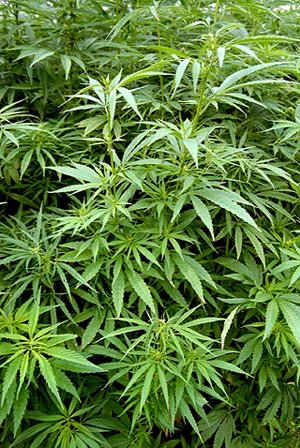 In addition, the researchers assessed the association between cannabis use and psychotic symptoms among a subgroup of 228 sibling pairs. The association persisted in this subgroup, “thus reducing the likelihood that the association was due to unmeasured shared genetic and/or environmental influences,” the authors continue.
“The nature of the relationship between psychosis and cannabis use is by no means simple,” they write. Individuals who had experienced hallucinations early in life were more likely to have used cannabis longer and to use it more frequently. “This demonstrates the complexity of the relationship: those individuals who were vulnerable to psychosis (i.e., those who had isolated psychotic symptoms) were more likely to commence cannabis use, which could then subsequently contribute to an increased risk of conversion to a non-affective psychotic disorder.”
The findings should encourage further research to elucidate the mechanisms underlying the relationship between psychosis and cannabis use, the authors conclude.
(Arch Gen Psychiatry. 2010;67[5]:(doi:10.1001/archgenpsychaitry.2010.6. Available pre-embargo to the media at http://www.jamamedia.org.)
Editor’s Note: This work was funded by the National Health and Medical Research Council of Australia. Co-author Dr. Alati is funded by a National Health and Medical Research Council Career Development Award in Population Health. Please see the article for additional information, including other authors, author contributions and affiliations, financial disclosures, funding and support, etc.
Source: American Medical Association (AMA)