|
Scientists believe they have isolated a potential treatment for patients struck down with anthrax. Biochemists at the University of Texas have found antibodies which attack the toxin produced by the anthrax bacteria.
It is this poison that endangers the lives of patients.
Millions have been invested in anthrax research in the US as a result of cases in the wake of the September 11 attack.
At present, however, there is no simple cure for anthrax.
Inhaling the spore kills in up to 80% of cases, according to records of outbreaks.
The new "antidote" has yet to be tested in human patients, but has proved effective both on bacteria in laboratory dishes, and in anthrax-infected rats.
Successful attack
Part of the key to the success of anthrax is its ability of the toxin to infiltrate and destroy a particular type of immune cell called a macrophage.
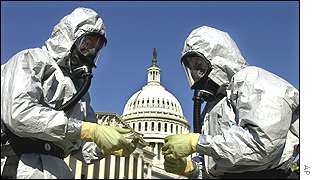
This prevents the immune system from dealing effectively with the infection.
One component of the toxin binds onto the surface of the macrophage, and the others penetrate the cell.
The antibody treatment developed in Texas targets the protein which binds the toxin to the macrophage.
If this is disabled, then the toxin's attack cannot succeed.
The scientists suggest that this approach may be able to help patients after symptoms of anthrax have appeared.
Anthrax spores - the dormant form of the bacteria, can survive in soil for decades, and while there are fears that terrorists may employ it in a bioweapon, naturally occurring cases do appear.
A vaccine exists - which also targets the same protein - but this has side effects and requires booster jabs.
[journal Nature Biotechnology]
««« »»»
Last Revised at December 10, 2007 by Lusine Kazoyan, M.D.
|