|
Doctors have been able to stop the progression of diabetes, in what they say is a significant breakthrough in the treatment of the condition.
Some experts have suggested the research could even lead to a cure for the condition.
The US researchers concentrated on Type 1 diabetes, which affects about 350,000 people in the UK.
In Type 1, otherwise known as insulin-dependent or juvenile diabetes, the cells in the pancreas that produce the hormone insulin are destroyed.
Most people with Type 1 cannot produce any insulin, which is needed to control blood sugar levels.
If they did not inject the hormone, they would die.
Promise
In a year-long trial, the team from Columbia University and the University of California, San Francisco, used a drug which suppresses the immune system.
It is an antibody which targets certain cells in the immune system.
They destroy other cells which produce insulin - this is what happens in diabetes.
|
"People with diabetes who make some insulin have a much easier time controlling their diabetes than those who do not" |
|
Dr Kevin Herold, Columbia Presbyterian Medical Center
|
By preventing the rogue cells working effectively, the body can continue to secrete some insulin and is not wholly reliant on injections, allowing better control of diabetes.
This means sufferers are less likely to develop complications such as heart, eye or kidney disease.
Similar therapies have been tried in the past but, unlike this latest drug, caused severe side effects.
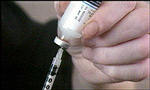
Twelve patients, aged seven to 27, were injected with the new drug every day for a fortnight shortly after being diagnosed with Type 1 diabetes.
Twelve others with Type 1 who did not receive the drug were also monitored.
After a year, nine who were given the drug had little, if any, loss in their ability to secrete insulin.
In contrast, 10 of the 12 who were not treated saw significant loss.
Those given the drug also saw other signs of improvement in their condition.
Larger studies are now planned.
Cure hope
Dr Kevin Herold, endocrinologist at the Naomi Berrie Diabetes Centre at Columbia Presbyterian Medical Center, led the trial.
He said: "Preserving insulin production is a very important finding of this trial since patients taking the new drug would not be entirely dependent on exogenous [external] insulin for metabolic control.
"People with diabetes who make some insulin have a much easier time controlling their diabetes than those who do not."
Robert Goldstein, chief scientific officer for the Juvenile Diabetes Research Foundation, which partly funded the study, said: "The remarkable results reported in this study provide enormous hope for finding a cure for people with Type 1 diabetes.
A spokesman for Diabetes UK told BBC News Online: "This research could be a very significant breakthrough for people with Type 1 diabetes, although it can only be used for those in the early stages of developing the condition.
"If the treatment continues to prove successful in trials it could greatly reduce the impact of diabetes on millions of people worldwide.
"We look forward to tracking the ongoing results of the planned trials."
[New England Journal of Medicine]
««« »»»
Last Revised at December 10, 2007 by Lusine Kazoyan, M.D.
|