|
Scientists hope they could soon use gene therapy to beat osteoarthritis. At the moment there is no cure or effective treatment for osteoarthritis - a degenerative form of joint disease.
The only treatment currently available for osteoarthritis are non-steroidal anti-inflammatory drugs which alleviate symptoms but do not affect disease progression.
Many people are unable to tolerate the drugs because of side-effects, particularly stomach problems.
Aging
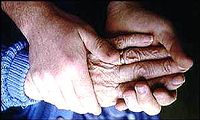
There are currently about two million people in the UK with the condition, but the numbers are on the increase as the population ages and becomes more overweight.
But a team of scientists from Manchester University's School of Biological Science hope that over the next five years they can develop a targeted gene therapy.
Gene therapy centres on replacing the faulty gene responsible with another which should work normally.
|
"We're confident that we will find effective target genes " |
|
Dr Gillian Wallis |
If successful they plan to start clinical trials on patients within the next decade.
Dr Gillian Wallis, a senior lecturer in medicine, said they are confident of success.
"Obviously we are still very much at the research stage, but if all our laboratory experiments work out then we hope to translate the results directly into clinical practice.
"We would hope to be looking at clinical trials on patients within ten years.
"We're confident that we will find effective target genes, which we then plan to introduce into joints using carrier viruses."
Treatment
The team's work is being funded by almost Ј685,000 from the medical research charity the Arthritis Research Campaign (ARC)
A spokeswoman for ARC said they were hopeful for a successful treatment.
"Modern medicine can currently offer nothing to slow down or stop disease progression in osteoarthritis but we have high hopes of this research in Manchester.
"Osteoarthritis is a very difficult research nut to crack, but our scientists are now making great strides and offering real hope of an effective treatment for the millions of patients in the UK."
[ ArmMed Media ]
««« »»»
Last Revised at December 10, 2007 by Lusine Kazoyan, M.D.
|