
Mediterranean diet gives longer life

Key points
- A Mediterranean diet with large amounts of vegetables and fish gives a longer life.
- Scientists at the Sahlgrenska Academy have now studied the effects of a Mediterranean diet on older people in Sweden.
- The results show that those who eat a Mediterranean diet have a 20% higher chance of living longer.
- These results are supported by three further as yet unpublished studies into Mediterranean diets and their health effects: one carried out on people in Denmark, the second on people in northern Sweden, and the third on children.
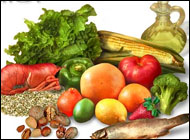
A Mediterranean diet with large amounts of vegetables and fish gives a longer life. This is the unanimous result of four studies to be published by the Sahlgrenska Academy at the University of Gothenburg. Research studies ever since the 1950s have shown that a Mediterranean diet, based on a high consumption of fish and vegetables and a low consumption of animal-based products such as meat and milk, leads to better health.
Study on older people
Scientists at the Sahlgrenska Academy have now studied the effects of a Mediterranean diet on older people in Sweden. They have used a unique study known as the "H70 study" to compare 70-year-olds who eat a Mediterranean diet with others who have eaten more meat and animal products. The H70 study has studied thousands of 70-year-olds in the Gothenburg region for more than 40 years.
Chance of living longer
The results show that those who eat a Mediterranean diet have a 20% higher chance of living longer. "This means in practice that older people who eat a Mediterranean diet live an estimated 2 3 years longer than those who don't", says Gianluca Tognon, scientist at the Sahlgrenska Academy, University of Gothenburg.
Support in other studies
These results are supported by three further as yet unpublished studies into Mediterranean diets and their health effects: one carried out on people in Denmark, the second on people in northern Sweden, and the third on children.
"The conclusion we can draw from these studies is that there is no doubt that a Mediterranean diet is linked to better health, not only for the elderly but also for youngsters", says Gianluca Tognon.
###
Italian background
Gianluca Tognon himself is from Italy, but moved to Sweden and Gothenburg specifically to collaborate with Lauren Lissner's research group at the Sahlgrenska Academy, and develop research into the Mediterranean diet.
UNESCO has recognised the Mediterranean diet as an intangible cultural heritage. UNESCO states that the Mediterranean diet is based on such items as fish, vegetables, nuts and fruit, but the concept includes also a structure of traditional customs in which knowledge is transferred between generations, giving a feeling of communal identity and continuity to the local population.
###
Gianluca Tognon
gianluca.tognon@gu.se
46-727-335-920
University of Gothenburg
Written and revised by
Andrey Nailor, M.D.
Our doctors write and review articles for accuracy and keep them up to date.
health.am provides general information, not medical advice. Always consult a qualified health professional about your own health.
Explore health topics
More in this topic
Weight & Nutrition → News
Mediterranean diet and physical activity each associated with lower death rate over 5 years
Eating a Mediterranean diet and following national recommendations for physical activity are each associated with a reduced risk of death over a five-year period, according to two reports in the December 10/24 issue of…
12 December 2007
 News
Drinking a little wine linked to men's longer life
Drinking a small amount of wine appears to extend men's life expectancy by a few years, Dutch researchers said on Wednesday in the latest study to find benefits in moderate drinking. Dutch researchers sought to gauge…
3 March 2007
 News
Mediterranean Diet May Cut Alzheimer's
New research links a Mediterranean diet rich in fruits, vegetables, fish, legumes, cereals, and olive oil to a lower risk of Alzheimer's diseaseAlzheimer's disease. The finding, published in the early online addition of…



