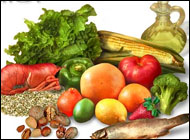
Bye bye Mediterranean diet, the poorest can't afford it anymore

Key points
- So the Mediterranean diet is an international star acclaimed by the scientific community as the best dietary paradigm.
- The alarm was raised by a team of Italian scientists from the Research Laboratories at the Fondazione di ricerca e cura Giovanni Paolo II – Catholic University of Campobasso who published in the British Medical Journal, BMJ Open, the results of a study on 13,000 subjects.
- Researchers analyzed information on over 13,000 people, a sub-sample of the widest epidemiological Moli-sani Project.
- "We found that low-income people showed the poorest adherence to Mediterranean diet as compared to those in the uppermost group of income – says Licia Iacoviello, chairperson of the Moli-sani Project– In particular, high-income people have 72% odds of being in the top category of adherence to Mediterranean diet.
The results of a large study published in the Bmj Open by Italian scientists, at the Fondazione di ricerca e cura Giovanni Paolo II – Catholic University of Campobasso, who analyzed data on 13,000 subjects enrolled in the Moli-sani Project
Recently the Mediterranean diet has achieved lots of distinctions, from the inclusion by the UNESCO in the Olympus of the World heritage list to a long series of dedicated congresses and meetings held everywhere in the globe with the aim of promoting its healthy properties against the most threatening diseases such as cardiovascular disease and tumors. So the Mediterranean diet is an international star acclaimed by the scientific community as the best dietary paradigm. And yet this eating model seems to creak under the burden of the economic crisis scaring the food trolley of millions of families worldwide.
The alarm was raised by a team of Italian scientists from the Research Laboratories at the Fondazione di ricerca e cura Giovanni Paolo II – Catholic University of Campobasso who published in the British Medical Journal, BMJ Open, the results of a study on 13,000 subjects.
"Our hypothesis comes from a pretty simple observation. – argues Marialaura Bonaccio first author of the study – We sought to see whether the increasing cost of the main food products and the progressive impoverishment of people could contribute to the obesity pandemic which has been affecting the countries of the Mediterranean area during the recent years, including Italy".
Researchers analyzed information on over 13,000 people, a sub-sample of the widest epidemiological Moli-sani Project. Since 2005 this project has been recruiting about 25,000 adult subjects from the Molise region aiming to investigate the relationship between genetic and environmental factors in the onset of chronic disease such as cardiovascular disease and tumors. The authors explored the association between income and dietary habits of participants, evaluated according to specific scores of adherence to Mediterranean diet.
"We found that low-income people showed the poorest adherence to Mediterranean diet as compared to those in the uppermost group of income – says Licia Iacoviello, chairperson of the Moli-sani Project– In particular, high-income people have 72% odds of being in the top category of adherence to Mediterranean diet. This means a less healthy diet for the poorest, who are more likely to get prepackaged or junk food, often cheaper than the fresh foods of the Mediterranean tradition. In the lowest-income category we have recorded a higher prevalence of obesity as well. Low-income people report 36 % of obesity compared to 20% in the uppermost income class".
"Obviously we have considered all the possible confounding factors which may bias the observed effects – the authors say –The educational level, for instance, has a huge role in determining health status, as showed by previous studies. That is why we have further divided our population according to educational level but in this case too income appears to influence people's food choices".
Written and revised by
David Cohen, M.D.
Our doctors write and review articles for accuracy and keep them up to date.
health.am provides general information, not medical advice. Always consult a qualified health professional about your own health.
Explore health topics
More in this topic
Weight & Nutrition → News
Weight and diet may help predict sleep quality
The old adage " you are what you eat ," may be better phrased as " your sleep relates to what you eat ." An individual's body composition and caloric intake can influence time spent in specific sleep stages, according…
12 June 2016
NewsDrinking more water associated with numerous dietary benefits, study finds
For people who want to control their weight or reduce their intakes of sugar, sodium and saturated fat, tap water may be what the doctor ordered. A new study that examined the dietary habits of more than 18,300 U.S.…
3 March 2016
 News
Weight loss through diet changes can improve sleep at any body weight, says Penn study
Weight loss due to dietary changes can improve sleepiness at any weight, says a study published by researchers from the Perelman School of Medicine at the University of Pennsylvania this month in the journal Sleep. The…