Avastin Eye Injection Treatment for Macular Degeneration
Key points
- Age-related macular degeneration (AMD) is the leading cause of blindness in people over 50 years of age.
- Avastin was not initially developed to treat your eye condition.
- Your condition may not get better or may become worse.
- There are other eye conditions that cause loss of vision due to abnormal growth of blood vessels in the back of the eye.
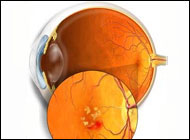
Age-related macular degeneration (AMD) is the leading cause of blindness in people over 50 years of age. It is caused by the breakdown of the central portion of the retina (the highly sensitive part of your eye that works like the film in a camera to capture the picture) called the macula. The macula is responsible for the fine central vision in the eye that is needed for driving a car, reading fine print, recognizing faces, etc. There are two types of macular degeneration: dry and wet. In the wet form of macular degeneration, abnormal blood vessels grow in the back of the eye. Sometimes these vessels leak blood or fluid that causes blurred or distorted vision. Without treatment, vision loss may be quick and severe.
There are other eye conditions that cause loss of vision due to abnormal growth of blood vessels in the back of the eye. These can occur even in young patients, and include, but are not limited to, conditions such as high myopia (nearsightedness), histoplasmosis, angioid streaks, and eye injury. Sometimes there is no known reason for the abnormal blood vessels. Without treatment, vision loss may be quick and severe.
Macular edema, or swelling around the macula,, is edema that affects vision but does not respond adequately to the usual treatment methods. It can occur with conditions such as central retinal vein occlusion and diabetic retinopathy. Without effective treatment, vision loss could progress and become permanent.
Off-Label Use of Avastin - Benefits
Avastin was not initially developed to treat your eye condition. Based upon the results of clinical trials that demonstrated its safety and effectiveness, Avastin was approved by the Food and Drug Administration (FDA) for the treatment of metastatic colorectal cancer. As a condition of approval, the manufacturer produced a “label” explaining the indications, risks, and benefits. The label explains that Avastin works by blocking a substance known as vascular endothelial growth factor or VEGF. Blocking or inhibiting VEGF helps prevent further growth of the blood vessels that the cancer needs to continue growing.
Once a device or medication is approved by the FDA, physicians may use it “off-label” for other purposes if they are well-informed about the product, base its use on firm scientific method and sound medical evidence, and maintain records of its use and effects. Ophthalmologists are using Avastin “off-label” to treat AMD and similar conditions since research indicates that VEGF is one of the causes for the growth of the abnormal vessels that cause these conditions. Some patients treated with Avastin had less fluid and more normal-appearing maculas, and their vision improved. Avastin is also used, therefore, to treat macular edema, or swelling of the macula.
Possible Avastin Limitations
Off-Label Drugs
Here are some examples of common drugs being used "off-label":
Written and revised by
Andrey Nailor, M.D.
Our doctors write and review articles for accuracy and keep them up to date.
health.am provides general information, not medical advice. Always consult a qualified health professional about your own health.