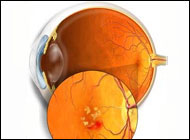
First Gene Associated with Dry Macular Degeneration Found
Key points
- In a paper published in the August 28, 2008 online issue of the New England Journal of Medicine, the researchers describe the discovery of the first gene associated with severe, “dry” macular degeneration, also known as geographic atrophy.
- Zhang and the research team have discovered the link between dry AMD and a key molecule that alerts the immune system to the presence of viral infections, a molecular protein called toll-like receptor (TLR)3.
- “Because of speculation among scientists that viral infections provoke the inflammation that increases the risk of macular degeneration, we tested for associations between AMD and TLR3, which is known to support innate immunity and host defense,” said Zhang.
- The researchers found that a genetic variant associated with low activity of the TLR3 receptor appears to confer protection against dry AMD, probably by suppressing the death of certain retinal cells.
In a study that underscores the important role that individual genetic profiles will play in the development of new therapies for disease, a multi-institutional research team – led by Kang Zhang, MD, PhD professor of ophthalmology and human genetics at Shiley Eye Center at the University of California, San Diego, School of Medicine – has made two important discoveries related to age-related macular degeneration (AMD), the leading cause of blindness in adults over the age of 60.
In a paper published in the August 28, 2008 online issue of the New England Journal of Medicine, the researchers describe the discovery of the first gene associated with severe, “dry” macular degeneration, also known as geographic atrophy. Secondly, they show that there could be adverse consequences, including blindness, if individuals who possess a particular variation of this gene are treated with an experimental therapy currently being tested for another form of AMD.
Zhang and the research team have discovered the link between dry AMD and a key molecule that alerts the immune system to the presence of viral infections, a molecular protein called toll-like receptor (TLR)3.
“Because of speculation among scientists that viral infections provoke the inflammation that increases the risk of macular degeneration, we tested for associations between AMD and TLR3, which is known to support innate immunity and host defense,” said Zhang.
The researchers found that a genetic variant associated with low activity of the TLR3 receptor appears to confer protection against dry AMD, probably by suppressing the death of certain retinal cells.
Dry AMD occurs when light-sensitive cells in the center of the retina, or macula – called retinal pigment epithelial cells – slowly break down, gradually blurring central vision. Over time, as less of the macula functions, central vision is irreversibly lost in the affected eye. Dry AMD affects eight to nine million people in the United States, leading to loss of vision in about one in nine patients, and is responsible for 10 percent of the cases of legal blindness in the United States.
Importantly, this research indicates that individuals with a genetic variant of TLR3 who undergo a new treatment called RNA interference (RNAi) could be at risk. A class of double-stranded RNA (like the genetic information carried by viruses), RNAi is used to turn off or silence other genes related to various diseases. Several human clinical trials are currently using RNAi, including therapies to treat the “wet” form of AMD that occurs when abnormal blood vessels behind the retina start to grow under the macula, which can lead to very rapid vision loss. Zhang warns that those testing RNAi therapies for wet AMD need to be cautious and aware of a possible unintended side effect.
“If you are genetically susceptible to macular degeneration and are exposed to a virus that activates TLR3, it could lead to the death of cells in the macula,” said Zhang. “Ironically, in some individuals, using RNAi to cure wet AMD might actually increase the risk for blindness from dry AMD.”
Written and revised by
Gerald Hurowitz, M.D.
Our doctors write and review articles for accuracy and keep them up to date.
health.am provides general information, not medical advice. Always consult a qualified health professional about your own health.
Explore health topics
More in this topic
Eyes, Ears & Teeth →A Look at the Future of Age-Related Macular Degeneration (AMD) Treatment
Two particularly notable research presentations at the American Academy of Ophthalmology’s Annual Meeting described new approaches to the treatment of “wet” Age-Related Macular Degeneration (AMD), the most common cause…
13 November 2007