
Yellow pigment that sits on the retina focus of macular degeneration research
Key points
- Whether a tiny yellow pigment is the main thing standing between many older people and macular degeneration is under study at the Medical College of Georgia.
- Researchers are measuring this macular pigment that sits on the retina at the fovea, the point of highest vision acuity and best color vision, to better understand what a healthy, normal pigment looks like, says Dr.
- The idea is that thinning of this pigment - comprised of yellow antioxidants that come from food or dietary supplements - opens the door for retinal cell destruction, the hallmark of macular degeneration.
- The hope is that measuring this protective pigment will one day be part of routine vision screening and macular degeneration will lose its distinction as the leading cause of blindness in people over age 60, says Dr.
Whether a tiny yellow pigment is the main thing standing between many older people and macular degeneration is under study at the Medical College of Georgia.
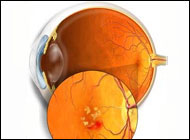
Researchers are measuring this macular pigment that sits on the retina at the fovea, the point of highest vision acuity and best color vision, to better understand what a healthy, normal pigment looks like, says Dr. John Nolan, vision scientist and Fulbright postdoctoral fellow in the MCG Department of Ophthalmology.
The idea is that thinning of this pigment - comprised of yellow antioxidants that come from food or dietary supplements - opens the door for retinal cell destruction, the hallmark of macular degeneration.
The hope is that measuring this protective pigment will one day be part of routine vision screening and macular degeneration will lose its distinction as the leading cause of blindness in people over age 60, says Dr. Nolan.
"This pigment is thought to protect the retina from damage by light and excess oxidation, which over a lifetime can accumulate and contribute to the process of macular degeneration," says Dr. Max Snodderly, MCG vision scientist and Dr. Nolan's sponsor.
The retina receiving too much high-energy blue light - the same light that gives the sky its color - seems to be a major cause of oxidation and cell death. "So you are kind of rusting as you get old," Dr. Snodderly says. A macular pigment that's thin because of genetics or gets that way because of a poor diet or smoking, enables such rusting.
Dr. Snodderly's studies of monkeys raised on a synthetic diet lacking components of the pigment - lutein and zeaxanthin - showed they also lacked the pigment until the components were added to the diet. "The retina was able to take it up, even though it had never seen it before," he says of the natural pigments found in dark green leafy vegetables such as spinach, turnips and collards, as well as colored fruit and egg yolk.
Studies of more than 800 people age 20-60 with good vision back in Dr. Nolan's homeland of Ireland have parallel findings: that the protective macular pigment can be increased with dietary change and/or dietary supplements of lutein and zeaxanthin. His studies, based at the Waterford Institute of Technology, included a subset of 200 people with healthy vision whose parents had macular degeneration. "This group with perfect vision had significantly lower levels of macular pigment than the control group. This reinforces the macular pigment story," says Dr. Nolan, whose work has indicated a thinning of the macular pigment occurs in most aging adults although other scientists, including Dr. Snodderly, have not seen that consistently.
"It may be that once you go beyond 60, which is the age when macular degeneration typically starts developing, the pigment is depleted for several reasons, including increased oxidative stress and a poor diet, both associated with an increase in age," Dr. Nolan says. "We found that smokers have significantly less macular pigment, both because they tend to have a poorer diet and smoking causes increased oxidative stress.
Written and revised by
Andrey Nailor, M.D.
Our doctors write and review articles for accuracy and keep them up to date.
health.am provides general information, not medical advice. Always consult a qualified health professional about your own health.
Explore health topics
More in this topic
Eyes, Ears & Teeth →International study offers new insight for understanding leading cause of blindness
An international study has identified the number of genetic factors known to play a role in age-related macular degeneration (AMD), the worldwide leading cause of blindness in the elderly. This new discovery may help to…
23 December 2015