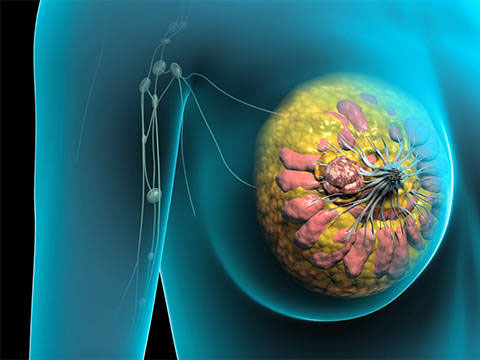
Metastatic Breast Cancer

Key points
- Metastatic breast cancer is incurable with currently available therapies.
- The primary goals of treatment of metastatic breast cancer are palliation of symptoms, prolongation of survival, and improvement in quality of life.
- Comparing a variety of treatments, each of these trials has shown that quality of life was better with the treatment that had the higher objective response rate, even if that treatment was more toxic.
- Management of metastatic disease involves the judicious use of local and systemic therapies that best palliate the patient's symptoms with the least toxicity.
Metastatic breast cancer is incurable with currently available therapies. Median survival ranges from 2 to 3 years; however, there is substantial variability in survival, with as many as 10% of patients living more than 10 years. Factors associated with longer survival include disease involving soft tissue and bone only (rather than visceral organs), hormone receptor positivity in the tumor, a long disease-free interval from diagnosis to recurrence, and limited number of metastatic sites. Response to therapy is also quite variable. Patients with the better prognostic factors for survival as just described are more likely to respond well to hormonal therapy. The heterogeneity among breast cancer patients with metastatic disease must be considered carefully in the care of these patients.
The primary goals of treatment of metastatic breast cancer are palliation of symptoms, prolongation of survival, and improvement in quality of life. Only a few randomized studies have incorporated quality of life endpoints.
Comparing a variety of treatments, each of these trials has shown that quality of life was better with the treatment that had the higher objective response rate, even if that treatment was more toxic. Treatment of metastatic breast cancer may prolong survival, but proving that a survival benefit exists is difficult because trials have not randomized patients to a supportive- care-only arm. In a meta-analysis of 50 randomized chemotherapy trials comparing a more effective treatment to a lesser one, the more effective chemotherapy prolonged median survival by as much as 6 months. This small improvement in average survival should not be used as routine justification to treat asymptomatic or minimally symptomatic patients with toxic therapy, particularly because there is no evidence that early initiation of therapy extends life.
Management of metastatic disease involves the judicious use of local and systemic therapies that best palliate the patient's symptoms with the least toxicity. In certain clinical situations, local therapy may be preferable to systemic therapy, such as in the situation of an isolated local recurrence. Such a recurrence can often be managed with local excision, radiotherapy, or both. A small percentage of patients with local regional recurrence will do well without evidence of progressive disease for an extended period of time. Other situations when local therapy is preferable include impending fracture from a bone metastasis, spinal cord compression, and brain metastases. In each of these cases, radiation therapy can result in significant palliation. Surgery may also play an important role in these situations.
Systemic treatment for metastatic breast cancer includes hormonal therapy and chemotherapy. Hormonal therapy should be considered first as it is usually much better tolerated than cytotoxic chemotherapy and can result in long remissions. Patient characteristics that predict for response to hormonal therapy include estrogen or progesterone receptor positivity, a long disease-free interval (from time of diagnosis to recurrence), the absence of visceral disease, postmenopausal status, and prior response to hormonal therapy. The majority of elderly patients have hormone receptor-positive tumors, and hormonal therapy is usually the initial treatment of choice. Overall objective response rates to hormonal therapy are in the range of 20% to 40%, depending on the patient population, with higher response rates seen in patients with multiple characteristics as just listed. In most randomized trials comparing two different hormonal treatments, response rates and duration of response have been similar. Tamoxifen, which is one of the least toxic hormonal agents, has traditionally been the first agent administered, followed by an aromatase inhibitor (e.g., anastrozole, letrozole, or exemestane). Recent data also suggest that aromatase inhibitors are at least at active as tamoxifen in the first-line setting in postmenopausal women with metastatic breast cancer. lists the principally used hormonal therapies and their main toxicities. Patients who respond to one hormonal treatment should usually be treated with another hormonal agent at the time of disease progression, unless they have extensive visceral disease or rapid disease progression, in which case chemot herapy should be considered. Studying initial therapy for metastatic disease in elderly women, the Eastern Cooperative Oncology Group randomized 181 women over the age of 65 to receive either tamoxifen or cyclophosphamide, methotrexate, and 5-fluorouracil (CMF) with crossover to the other treatment at the time of progression. Response rates were not significantly different between the two groups: initial response rates were 45% with tamoxifen and 38% with CMF, and response rates after crossover were 29% with tamoxifen and 31% with CMF. Survival was slightly higher in the group treated initially with tamoxifen. Combined endocrine treatment (combinations of tamoxifen, aminoglutethamide, hydrocortisone, and fluoxymesterone) has been studied in older patients and thus far shown no significant benefit. Newer specific aromatase inhibitors may show more promise, and combinations with them are currently being evaluated in clinical trials.
Written and revised by
David Cohen, M.D.
Our doctors write and review articles for accuracy and keep them up to date.
health.am provides general information, not medical advice. Always consult a qualified health professional about your own health.
Explore health topics
More in this topic
Cancer → News
Novel gene variants identified in male breast cancer
Male breast cancer (MBC) is a very rare tumor type, occurring in just 1% of all breast cancer cases, and the underlying genetic causes and treatment of MBC is not well understood. In a paper published in the March issue…
3 March 2016
 News
Early MRI screening reduces risk of breast cancer death for survivors of childhood HL
Researchers at Princess Margaret Cancer Centre have confirmed in a screening effectiveness study that early screening with MRIs can reduce breast cancer mortality for female survivors of childhood Hodgkin's lymphoma…
3 March 2016
NewsNonrecommended screenings for prostate, breast cancer in older individuals
An estimated 15.7 percent of individuals 65 or older may have received nonrecommended screenings for prostate and breast cancers because they had limited life expectancies of less than 10 years, according to an article…
22 January 2016