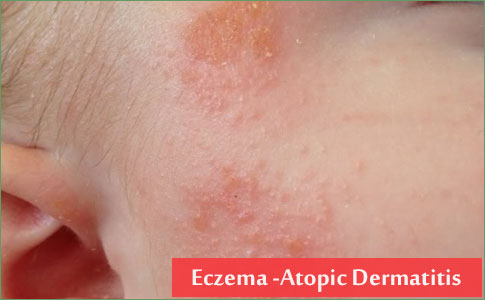
Study Reveals Major Shift in How Eczema Develops

Key points
- Like a fence or barricade intended to stop unwanted intruders, the skin serves as a barrier protecting the body from the hundreds of allergens, irritants, pollutants and microbes people come in contact with every day.
- Tightening both leaky barriers may be an effective treatment strategy for eczema patients, who often have limited options to temper the disease.
- “Over the past five years, disruption of the skin barrier has become a central hypothesis to explain the development of eczema,” said Lisa Beck, M.D., lead study author and associate professor in the Department of Dermatology at the University of Rochester Medical Center.
- Currently, there are no treatments that target skin barrier dysfunction in eczema.
Like a fence or barricade intended to stop unwanted intruders, the skin serves as a barrier protecting the body from the hundreds of allergens, irritants, pollutants and microbes people come in contact with every day. In patients with eczema, or atopic dermatitis, the most common inflammatory human skin disease, the skin barrier is leaky, allowing intruders – pollen, mold, pet dander, dust mites and others – to be sensed by the skin and subsequently wreak havoc on the immune system.
While the upper-most layer of the skin – the stratum corneum – has been pinned as the culprit in previous research, a new study published in the Journal of Allergy and Clinical Immunology found that a second skin barrier structure, consisting of cell-to-cell connections known as tight junctions, is also faulty in eczema patients and likely plays a role in the development of the disease. Tightening both leaky barriers may be an effective treatment strategy for eczema patients, who often have limited options to temper the disease.
“Over the past five years, disruption of the skin barrier has become a central hypothesis to explain the development of eczema,” said Lisa Beck, M.D., lead study author and associate professor in the Department of Dermatology at the University of Rochester Medical Center. “Our findings challenge the belief that the top layer of the skin or stratum corneum is the sole barrier structure: It suggests that both the stratum corneum and tight junctions need to be defective to jumpstart the disease.”
Currently, there are no treatments that target skin barrier dysfunction in eczema. To treat eczema, which causes dry, red, itchy skin, physicians typically prescribe anti-inflammatory drugs, like prednisone, and a variety of topical anti-inflammatory creams and ointments. But, modest benefit, negative side effects and cost concerns associated with these therapies leave patients and doctors eagerly awaiting new alternatives.
“We want to figure out what current eczema therapies do to both barrier structures and start thinking about new treatments to close the breaks that let irritants in and water out and subsequently drive the inflammation and dryness that is characteristic of the disease,” noted Beck, who treats eczema patients in addition to conducting research on the condition.
To better understand the role of tight junctions in eczema, Beck and her team studied skin samples from eczema patients and healthy individuals. Using resistance and permeability tests, they discovered that tight junctions, which act like a gate controlling the passage of water and particles, were strong and tight in healthy skin samples, yet loose and porous in the skin of eczema patients.
On further investigation, they found that a particular tight junction protein, claudin-1, which determines the strength and permeability of tight junctions in skin, is significantly reduced in the skin of eczema patients, but not in healthy individuals or individuals with psoriasis, another common chronic skin disease. They demonstrated that reducing claudin-1 expression in skin cells from healthy donors made the tight junctions leaky and more permeable, a finding in line with results of other research groups.
Written and revised by
David Cohen, M.D.
Our doctors write and review articles for accuracy and keep them up to date.
health.am provides general information, not medical advice. Always consult a qualified health professional about your own health.
Explore health topics
More in this topic
Skin, Hair & Beauty →NewsSunscreen: How To Use It Effectively
Sunscreen is a must for people living in Colorado, as the higher elevation makes the chances of sun damage - or worse, skin cancer - much higher. But with so many brands out there, how do you decide which sunscreen is…
30 May 2012
NewsSunblocks are the new multi-taskers
The beginning of summer always seems to be accompanied by an onslaught of sunscreens. The market is crowded with lotions and sprays, powders and lip balms, and, increasingly, multi-tasking products with inventive…
26 May 2012
NewsExercise tied to lower risk of psoriasis: study
Results from a large U.S. study suggest women who regularly exercise vigorously, including runners and aerobics buffs, may be less likely to get psoriasis than less-active women. Researchers have known that people who…
22 May 2012