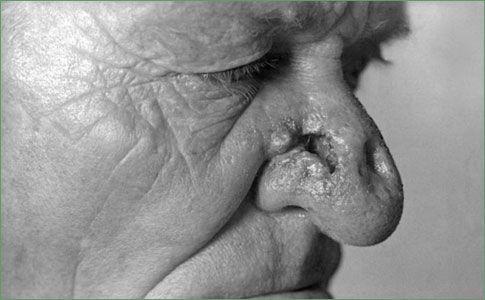
Syphilis - Laboratory Diagnosis

Key points
- Because the infectious agent of syphilis cannot be cultured in vitro, diagnostic measures must rely mainly on serologic testing, microscopic detection of T pallidum in lesions, and other examinations (biopsies, lumbar puncture, x-rays) for evidence of tissue damage.
- Serologic Tests for Syphilis There are two general categories of serologic tests for syphilis: (1) Nontreponemal tests detect antibodies to lipoidal antigens present in either the host or in T pallidum.
- Nontreponemal Antigen Tests - The most commonly used nontreponemal antigen tests are the Venereal Disease Research Laboratory (VDRL) and rapid plasma reagin (RPR), which measure the ability of heated serum to flocculate a suspension of cardiolipin-cholesterol-lecithin.
- Nontreponemal tests generally become positive 4-6 weeks after infection, or 1-3 weeks after the appearance of a primary lesion; they are almost invariably positive in the secondary stage, with titers ?
Because the infectious agent of syphilis cannot be cultured in vitro, diagnostic measures must rely mainly on serologic testing, microscopic detection of T pallidum in lesions, and other examinations (biopsies, lumbar puncture, x-rays) for evidence of tissue damage.
A. Serologic Tests for Syphilis
There are two general categories of serologic tests for syphilis: (1) Nontreponemal tests detect antibodies to lipoidal antigens present in either the host or in T pallidum. The original antigens employed to measure these nonspecific antibodies (reagin) were crude extracts of beef heart or liver and resulted in significant numbers of false-positive reactions. The cardiolipin-cholesterol-lecithin preparation presently used is much purer and gives fewer false-positive reactions. (2) Treponemal tests employ live or killed T pallidum as antigen to detect antibodies specific for pathogenic treponemes.
1. Nontreponemal Antigen Tests - The most commonly used nontreponemal antigen tests are the Venereal Disease Research Laboratory (VDRL) and rapid plasma reagin (RPR), which measure the ability of heated serum to flocculate a suspension of cardiolipin-cholesterol-lecithin. The flocculation tests are inexpensive, rapid, and easy to perform and are therefore used primarily for routine screening. Quantitative expression of the reactivity of the serum, based upon titration of dilutions of serum, is valuable in establishing the diagnosis and in evaluating the efficacy of treatment, since titers usually correlate with disease activity.
Nontreponemal tests generally become positive 4-6 weeks after infection, or 1-3 weeks after the appearance of a primary lesion; they are almost invariably positive in the secondary stage, with titers ? 1:32. In the late stages, titers tend to be lower (< 1:4). These serologic tests are not highly specific and must be closely correlated with other clinical and laboratory findings. The tests are positive in patients with non-sexually transmitted treponematoses (see below). More importantly, "false-positive" serologic reactions are frequently encountered in a wide variety of nontreponemal states, including connective tissue diseases, infectious mononucleosis, malaria, febrile diseases, leprosy, intravenous drug use, infective endocarditis, old age, hepatitis C viral infection, and pregnancy. False-positive tests also occur more commonly in HIV-seropositive patients (4%) than in HIV-seronegative patients (0.8%). False-positive reactions are usually of low titer and transient and may be distinguished from true positives by specific treponemal antibody tests. False-negative results can be seen when very high antibody titers are present (the prozone phenomenon). If syphilis is strongly suspected and the nontreponemal test is negative, the laboratory should be instructed to dilute the specimen to detect a positive reaction. The RPR and VDRL tests are equally reliable, but titers of RPR tend to be higher than the VDRL. Thus, when these tests are used to follow disease activity, the same testing method should be used and preferably should be performed at the same laboratory.
Written and revised by
Andrey Nailor, M.D.
Our doctors write and review articles for accuracy and keep them up to date.
health.am provides general information, not medical advice. Always consult a qualified health professional about your own health.
Explore health topics
More in this topic
Sexual Health → Guide
Erectile Dysfunction (Impotence) Diagnosis
In making a diagnosis of erectile dysfunction (ED), your doctor will start by taking a detailed medical and psychosexual history and conducting a thorough physical examination. If possible, interviewing your partner…
13 October 2007
 Guide
Diagnosis of erectile dysfunction
The proper goal-oriented evaluation of a man proactive and complaining of erectile dysfunction requires a sympathetically elicited history, a focused physical examination and various carefully selected special…
13 October 2007
GuidePhysical Examination - Diagnosis of erectile dysfunction
Erectile dysfunction (ED) has been defined as the persistent inability to achieve and/or to maintain an erection for a satisfactory sexual intercourse. This event can occur occasionally without inducing psychological or…
13 October 2007