Differential diagnosis and complications of Childhood obesity
Key points
- Endocrine diseases, congenital and acquired hypothalamic defects, genetic syndromes, and use of drugs affecting appetite should be considered during assessment of paediatric patients with obesity (figure 2).
- Clinical history and examination should guide differential diagnosis.
- Almost all patients, however, do not have any of these identifiable disorders.
- Figure 1A simplified model of the leptin signalling pathway Lines with arrowheads show stimulatory action.
Endocrine diseases, congenital and acquired hypothalamic defects, genetic syndromes, and use of drugs affecting appetite should be considered during assessment of paediatric patients with obesity (figure 2).
Clinical history and examination should guide differential diagnosis. Onset of obesity during early infancy raises suspicion of function-changing genetic mutations affecting the leptin signalling pathway, but these disorders are very rare, with the most common, melanocortin-4-receptor defects, affecting less than 5% of children with early-onset obesity.56
During assessment of new-onset excessive weight gain, potential side-effects from a recently initiated drug should be taken into consideration, because weight gain can be associated with administration of insulin or insulin secretagogues, glucocorticoids, hormonal contraceptives (eg, depot medroxyprogesterone acetate), psychotropic drugs (including atypical antipsychotics [eg, clozapine, olanzapine, risperidone], mood stabilisers [eg, lithium], tricyclic antidepressants [eg, amitriptyline, imipramine, and nortriptyline], and anticonvulsants [eg, valproic acid, gabapentin, and carbamazepine]), antihypertensive drugs (eg, propranolol and clonidine), and antihistamines.65 In patients with decreased growth velocity despite continued weight gain, an endocrinopathy should be considered; measurement of thyroidstimulating hormone and free thyroxine and referral to a paediatric endocrinologist are recommended.
Almost all patients, however, do not have any of these identifiable disorders. All patients, irrespective of cause of obesity, should be assessed for modifiable lifestyle factors, including physical activity and diet, and screened for complications of obesity, including measurement of lipid and glucose concentrations after overnight fasting, and alanine aminotransferase. If fasting glucose concentration is 5.6 - 6.9 mmol/L, an oral glucose tolerance test is recommended. Screening for vitamin D and iron deficiency should also be considered.
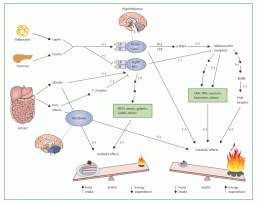
Figure 1A simplified model of the leptin signalling pathway
Lines with arrowheads show stimulatory action. Lines with perpendicular endblocks show inhibitory action. AgRP=agouti-related protein. BDNF=brain-derived neurotrophic factor. CART=cocaine-amphetamine related transcript. CPE=carboxypeptidase E. CRH=corticotropin-releasing hormone. GABA=gamma amino butyric acid.
GI=gastrointestinal. IR=insulin receptor. LR=leptin receptor. MCH=melanin-concentrating hormone. MSH=melanocyte-stimulating hormone. NPY=neuropeptide Y.
PC1=prohormone convertase 1. POMC=pro-opiomelanocortin. PYY=peptide YY. TRH=thyrotropin-releasing hormone. TrkB=tropomyosin receptor kinase B.
Written and revised by
Andrey Nailor, M.D.
Our doctors write and review articles for accuracy and keep them up to date.
health.am provides general information, not medical advice. Always consult a qualified health professional about your own health.
Explore health topics
More in this topic
Weight & Nutrition → News
Omaha Gets Money to Fight Childhood Obesity
The U.S. Department of Health and Human Services is trying to combat the obesity problem by distributing over 372 million dollars in grants. Some of that money is being sent right here to Douglas County. While a study…
22 March 2010
 News
First lady asks foodmakers to be on front line tackling childhood obesity
Michelle Obama on Tuesday called on corporate food giants such as Coca-Cola, General Mills and Kraft Foods to step up efforts to produce more healthful food and then market that, rather than junk food, to children.…
18 March 2010
 News
Conclusive Proof that Childhood Obesity Leads to Premature Death
Over ten million American kids between ages 10 and 17 are obese. One out of three are either overweight or obese. Those are startling numbers which are finally gaining some serious attention. Yet unlike obvious…