
Type 1 and type 2 alcoholism
Key points
- Alcoholism is a chronic, often progressive disease in which a person craves alcohol and drinks despite repeated alcohol related problems (like losing a job or a relationship).
- Type 1 alcoholics do much better in treatment and, because of longstanding antisocial behaviors and attitudes, Type 2 alcoholics usually need long-term structure to maintain sobriety (Woodward, 1998).
- Becoming addicted to alcohol is a gradual process that happens as alcohol changes the level of chemicals in your brain, especially gamma-aminobutyric acid or GABA (which stops you from being impulsive) and dopamine (which is linked with pleasurable feelings).
- About 18 million people in the United States abuse alcohol, and estimates suggest that more than 70 million Americans have dealt with alcoholism in their family.
Alcoholism is a chronic, often progressive disease in which a person craves alcohol and drinks despite repeated alcohol related problems (like losing a job or a relationship). Alcoholism involves a physical dependence on alcohol, but other factors include genetic, psychological, and cultural influences.
Becoming addicted to alcohol is a gradual process that happens as alcohol changes the level of chemicals in your brain, especially gamma-aminobutyric acid or GABA (which stops you from being impulsive) and dopamine (which is linked with pleasurable feelings). As the levels of these chemicals change, you crave alcohol to make yourself feel good again.
About 18 million people in the United States abuse alcohol, and estimates suggest that more than 70 million Americans have dealt with alcoholism in their family. Alcohol is involved in almost half or all traffic deaths in the U.S.
Alcoholism is characterized by craving alcohol and losing control over drinking, along with a physical dependence (meaning that the person experiences withdrawal symptoms when not drinking) and a tolerance for alcohol (meaning the person needs to drink greater amounts to feel “good”). Before entering recovery, most alcoholics will deny they have a problem. People who abuse alcohol but are not dependent on it may have similar symptoms, but they don' t feel the same craving to drink and usually don' t experience withdrawal symptoms.
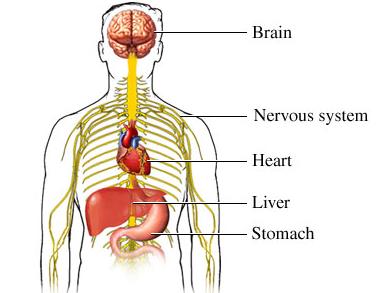
Type 1 alcoholism accounts for about 75% of alcoholics and is characterized by the following signs and symptoms:
- Onset of alcohol-related problems after the age of 25.
- A low degree of spontaneous alcohol-seeking behavior and alcohol-related fighting.
- Psychological dependence, coupled with guilt and fear about alcoholism.
- A low degree of novelty-seeking and a high degree of harm avoidance.
Type 2 alcoholism is characterized by the following signs and symptoms:
- Onset of alcohol-related problems before the age of 25
- High degree of spontaneous alcohol-seeking behavior and fighting
- Infrequent feelings of guilt and fear about alcohol dependence
- A low degree of harm avoidance and a high degree of thrill seeking
Type 1 alcoholics do much better in treatment and, because of longstanding antisocial behaviors and attitudes, Type 2 alcoholics usually need long-term structure to maintain sobriety (Woodward, 1998). Alcohol and all drugs trigger the mesolimbic dopamine reward system and the endogenous opioid system, which reward drinking. This is what addicts the brain and makes it impossible to stop drinking. If alcoholics stop drinking on their own, at the very least they are going to feel restless, irritable, and discontent. Only alcohol will move the patient back toward a feeling of peace.
Written and revised by
David Cohen, M.D.
Our doctors write and review articles for accuracy and keep them up to date.
health.am provides general information, not medical advice. Always consult a qualified health professional about your own health.
Explore health topics
More in this topic
Mental Health → Guide
Addiction is a brain disease - Treating Alcoholism
The brain of someone addicted to alcohol is a changed brain. The chronic use of any mood-altering chemical first chemically changes the brain as the cells respond to the poison by producing counteracting chemical…
16 April 2011
 Guide
Treating Alcoholism - Critical Concepts
The production of wine probably originated around 4000 to 6000 B.C. in the mountainous region between the Black and Caspian seas. Commercial wine production was well underway by 1500 B.C. (Courtwright, 2001). Alcohol is…
16 April 2011
GuideMethods of Treatment of Alcoholism in the twenty-first century
Although the very hard-drinking days of some past centuries appear to be long gone, there are still problems with alcohol abuse and alcohol dependence in the United States and in many other countries today. For example,…




