
Alcoholism is a medical emergency
Key points
- The only way to think about alcoholism accurately is as a medical emergency.
- But there is another part of you, a stronger part.
- Don't miss a miracle when it happens before your eyes.
- Thirty percent of patients in acute care hospitals are addicted.
The only way to think about alcoholism accurately is as a medical emergency. You are dealing with a person who is dying. Evidence says that 68% of people who come to a trauma center have an alcohol or drug problem.
Thirty percent of patients in acute care hospitals are addicted. Alcoholics spend four times the amount of time in a hospital as nondrinkers, mostly from drinking-related injuries. Up to 20% of visits to primary care physicians are related to substance abuse problems. Yet, doctors almost never recognize the alcohol problem:
Sadly, although physicians are the professionals most often cited by patients
and families as the "most appropriate" source of advice and guidance about
issues related to the use of alcohol, tobacco and other drugs, they also are re-
ported to be the "least helpful" in actually addressing these issues. Most di-
agnoses of alcohol abuse and addiction are missed by physicians, and even if
a diagnosis is made, many physicians do not know how to develop an orga-
nized treatment plan. (Conigliaro, Reyes, Parran, & Schultz, 2003, p. 325)
About 10% of the time, addiction is recognized as the cause of the problem that brought the patient into the health care system. A cut on your head probably won't kill you. A broken bone probably won't kill you. An ulcer probably won't kill you. But alcoholism will kill you if you allow it to continue. The death certificate might list a motor vehicle accident, a heart attack, or a stroke. It might be called cirrhosis or cancer, but the cause is addiction. The accident happened because the patient was intoxicated. The murder happened because the person was drunk. The person died of liver failure from alcohol abuse. The only hope the patient has is you, regardless of your occupation. You may be a nurse, a member of the clergy, an EMT or paramedic, a police officer, ambulance driver, teacher, counselor, child, or spouse, but you see that the patient needs your help.
What you must do
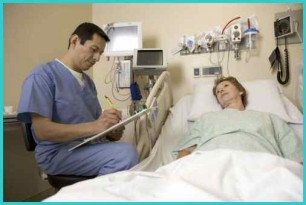
You have recognized the disease. Are you going to be silent? Are you going to let the patient die? A big part of you wants to do that. It's the easy way out. But there is another part of you, a stronger part. It's that part of you that is not afraid of anything. A part of you is connected to the truth; a part of you will never stand by and watch another patient lose the battle against alcoholism.
Don't miss the miracle
Don't miss a miracle when it happens before your eyes. God Almighty has sent this patient to you because he or she is lost in the darkness, and you are the only one who can show the way out. The Big Book of
Written and revised by
Gerald Hurowitz, M.D.
Our doctors write and review articles for accuracy and keep them up to date.
health.am provides general information, not medical advice. Always consult a qualified health professional about your own health.
Explore health topics
More in this topic
Mental Health → News
The Truth About Medical Marijuana
Medical marijuana is gaining momentum worldwide as a natural medicine that provides safe alternatives to treatment by toxic chemicals. The purpose of this website is to promote education in regards to medical marijuana…
25 February 2012
 News
Alcoholism not uncommon among surgeons
About 15 percent of surgeons have alcohol abuse or dependency problems, a rate that is somewhat higher than the rest of the population, according to a new survey. The researchers also found that surgeons who showed…
24 February 2012
 News
A family history of alcoholism may make adolescent brains respond differently
Researchers know that adolescents with a family history of alcoholism (FHP) are at risk for developing alcohol use disorders. Some studies have shown that, compared to their peers, FHP adolescents have deficits in…
18 January 2012







