
Schizophrenia Course and outcome
Key points
- The subsequent evolution of evidence did not disturb this initial impression (Murphy and Raman, 1971; Jablensky et al., 1992; Leff et al., 1992) (Table 2.2).
- Notes: asmyp, asymptomatic; psych, psychotic; mod, moderate; min, minimal; rem, lasting remission; recov, recovered; SMR, standardized mortality ratio. a Follow-up for 5 or more years; only data from last follow-up of the cohort is included unless otherwise indicated.
- A study on the island of Mauritius (Murphy and Raman, 1971), examining 12-year outcomes of all patients with a clinical diagnosis of schizophrenia on first admission to the local hospital, found that 64% had no symptoms and were independent.
- In this context, the WHO embarked upon an ambitious course of research to examine the issue of varied outcomes in different cultural settings.
Scattered early reports that complete remission of schizophrenia was common in developing countries, in spite of the unavailability of treatment, suggested that course and outcome were more favourable in these settings (e.g. Lambo, 1960; Rin and Lin, 1962; German, 1972). The subsequent evolution of evidence did not disturb this initial impression (Murphy and Raman, 1971; Jablensky et al., 1992; Leff et al., 1992) (Table 2.2).
A study on the island of Mauritius (Murphy and Raman, 1971), examining 12-year outcomes of all patients with a clinical diagnosis of schizophrenia on first admission to the local hospital, found that 64% had no symptoms and were independent. The authors also compared their results with a British study (Brown et al., 1966) and concluded that schizophrenic psychosis had a better overall prognosis in Mauritius than in Britain.
In this context, the WHO embarked upon an ambitious course of research to examine the issue of varied outcomes in different cultural settings.
Two large multicentre studies, the International Pilot Study of Schizophrenia (IPSS) and the Ten Carpenter and Strauss (1991) assessed 40% of the original Washington DC IPSS cohort at 11 years and found little change in the functioning of patients (in terms of social contacts, employment or symptoms) compared with functioning at 2 years.
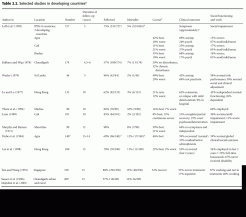
Table 2.2. Selected studies in developing countriesa
Notes:
asmyp, asymptomatic; psych, psychotic; mod, moderate; min, minimal; rem, lasting remission; recov, recovered; SMR, standardized mortality ratio.
a Follow-up for 5 or more years; only data from last follow-up of the cohort is included unless otherwise indicated. The percentages for course and
outcome pertain to those where a given outcome is known.
b Best, single episode complete recovery; worst, continuous, episode of inclusion continues throughout follow-up.
c Data on outcome for IPSS study sites in developed countries appear in Table 2.3.
d Data based on entire study sample; outcomes reported for schizophrenia.
e Estimates based on Figure 1, p. 136, Lef et al., 1992.
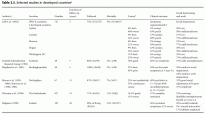
Table 2.3. Selected studies in developed countriesa
Notes:
asymp, asymptomatic; mod, moderate; sev, severe; f-u, follow-up.
a Follow-up for 5 or more years; only data from last follow-up of cohort included unless otherwise indicated. The percentages for course and outcomes pertain to those where a given outcome is known.
Written and revised by
Andrey Nailor, M.D.
Our doctors write and review articles for accuracy and keep them up to date.
health.am provides general information, not medical advice. Always consult a qualified health professional about your own health.
Explore health topics
More in this topic
Mental Health → News
Early intensive intervention improves outcomes for children with autism spectrum disorder
Early intensive intervention improves outcomes for children with autism spectrum disorder A recent study published in the July 2015 issue of the Journal of the American Academy of Child and Adolescent Psychiatry…
11 June 2015
 News
Direct Current Stimulation Boosts Cognition in Schizophrenia
Transcranial direct current stimulation (tDCS) may improve short-term memory in people with schizophrenia, a small study suggests. Cognitive impairment is nearly ubiquitous in patients with schizophrenia, and effective…
6 June 2015
 News
Developing delirium in the ICU linked to fatal outcomes
About one-third of patients admitted to an intensive care unit (ICU) will develop delirium, a condition that lengthens hospital stays and substantially increases one's risk of dying in the hospital, according to a new…





