
Bilingual babies' vocabulary linked to early brain differentiation
Key points
- Babies and children are whizzes at learning a second language, but that ability begins to fade as early as their first birthdays.
- Tips for biligual families Start early: The easiest way to learn language is right from birth.
- Researchers at the University of Washington's Institute for Learning & Brain Sciences are investigating the brain mechanisms that contribute to infants' prowess at learning languages, with the hope that the findings could boost bilingualism in adults, too.
- In a new study, the researchers report that the brains of babies raised in bilingual households show a longer period of being flexible to different languages, especially if they hear a lot of language at home.
Babies and children are whizzes at learning a second language, but that ability begins to fade as early as their first birthdays.
Researchers at the University of Washington's Institute for Learning & Brain Sciences are investigating the brain mechanisms that contribute to infants' prowess at learning languages, with the hope that the findings could boost bilingualism in adults, too.
In a new study, the researchers report that the brains of babies raised in bilingual households show a longer period of being flexible to different languages, especially if they hear a lot of language at home. The researchers also show that the relative amount of each language – English and Spanish – babies were exposed to affected their vocabulary as toddlers.
The study, published online Aug. 17 in Journal of Phonetics, is the first to measure brain activity throughout infancy and relate it to language exposure and speaking ability.
"The bilingual brain is fascinating because it reflects humans' abilities for flexible thinking – bilingual babies learn that objects and events in the world have two names, and flexibly switch between these labels, giving the brain lots of good exercise," said Patricia Kuhl, co-author of the study and co-director of the UW's Institute for Learning & Brain Sciences.
Kuhl's previous studies show that between 8 and 10 months of age, monolingual babies become increasingly able to distinguish speech sounds of their native language, while at the same time their ability to distinguish sounds from a foreign language declines. For instance, between 8 and 10 months of age babies exposed to English become better at detecting the difference between "r" and "l" sounds, which are prevalent in the English language. This is the same age when Japanese babies, who are not exposed to as many "r" and "l" sounds, decline in their ability to detect them.
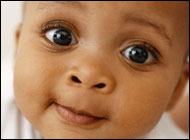
"The infant brain tunes itself to the sounds of the language during this sensitive period in development, and we're trying to figure out exactly how that happens," said Kuhl, who's also a UW professor of speech and hearing sciences. "But almost nothing is known about how bilingual babies do this for two languages. Knowing how experience sculpts the brain will tell us something that goes way beyond language development."
In the current study, babies from monolingual (English or Spanish) and bilingual (English and Spanish) households wore caps fitted with electrodes to measure brain activity with an electroencephalogram, or EEG, a device that records the flow of energy in the brain. Babies heard background speech sounds in one language, and then a contrasting sound in the other language occurred occasionally.

Written and revised by
Andrey Nailor, M.D.
Our doctors write and review articles for accuracy and keep them up to date.
health.am provides general information, not medical advice. Always consult a qualified health professional about your own health.
Explore health topics
More in this topic
Children's Health → News
TV time linked to less sleep for kids
The more television children watch, the less total sleep they're getting, according to a small Spanish study. Researchers found that a nine-year-old who watched five hours of television a day, for example, slept an…
13 March 2014
 News
Early treatment with AED reduces duration of febrile seizures
New research shows that children with febrile status epilepticus (FSE) who receive earlier treatment with antiepileptic drugs (AEDs) experience a reduction in the duration of the seizure. The study published in…
6 February 2014
NewsHigher vitamin D levels in pregnancy could help babies become stronger
Children are likely to have stronger muscles if their mothers had a higher level of vitamin D in their body during pregnancy, according to new research from the Medical Research Council Lifecourse Epidemiology Unit (MRC…
4 January 2014


