Tamoxifen for Adjuvant Therapy
Key points
- The largest group of women in the 1995 analysis included almost 37,000 women randomized in 55 trials, all of which were designed to look at whether tamoxifen was an active agent in the postoperative setting.
- The effects of tamoxifen are apparent on the risks of recurrence after the first year of treatment, with most of the benefits seen during the initial 5 years of therapy.
- This effect was most pronounced for women who received 5 years of adjuvant tamoxifen, with a reduction in the risk of recurrence of 42% (standard deviation [SD]) and a reduction in the risk of death of 22% (SD 4).
- The dose of tamoxifen that was administered in most of these trials was 20-40 mg each day, and there was no evidence of a dose-response relationship within this range.
The largest group of women in the 1995 analysis included almost 37,000 women randomized in 55 trials, all of which were designed to look at whether tamoxifen was an active agent in the postoperative setting. Women who were randomized to tamoxifen were found to have a highly significant reduction in the annual risks of both recurrence and death compared with women who received no adjuvant tamoxifen. This was seen for women who were randomized to tamoxifen for a median duration of 1, 2 or 5 years.
This effect was most pronounced for women who received 5 years of adjuvant tamoxifen, with a reduction in the risk of recurrence of 42% (standard deviation [SD]) and a reduction in the risk of death of 22% (SD 4). A longer duration of tamoxifen is currently being explored; however, at the present time there are no data to suggest an advantage to more than 5 years of tamoxifen.
The dose of tamoxifen that was administered in most of these trials was 20-40 mg each day, and there was no evidence of a dose-response relationship within this range.
Most of the benefit of tamoxifen was noted for women with estrogen-receptor (ER)-positive tumors rather than for patients with ER-poor tumors (Table 8.1). After 5 years of tamoxifen, women with ER-positive tumors had a reduction in the risk of recurrence of 50% (SD 4), compared with a risk reduction of only 6% (SD 11) for women with ER-poor tumors.
Within this "receptor-poor" category, some of the receptors must have been low receptor-positive, which partially accounts for the small positive effect.
The benefits of tamoxifen were most significant in women with the highest estrogen-receptor expression (>100 fmol receptor per mg cytosol protein).
The 1995 analysis was the first overview to provide convincing evidence of a lack of a substantial benefit for the effect of tamoxifen in the ER-poor population, and the hormone-receptor measurement is considered an important determinant of the response to treatment. Although the number of women was small, patients with ER-negative and progesterone-receptor (PR)-positive tumors appeared to benefit from tamoxifen; therefore, this subgroup most likely represents a tamoxifen-responsive population.
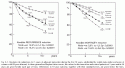
The proportional benefits of tamoxifen are similar for women with both lymph node-positive and node-negative disease. The absolute benefits, however, from the use of tamoxifen are related to each woman's risk of recurrence. Women with lymph node-positive disease have a higher annual risk of recurrence and mortality from breast cancer and therefore derive a greater absolute benefit from the use of tamoxifen (Fig. 8.1).
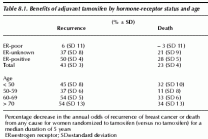
Table 8.1. Benefits of adjuvant tamoxifen by hormone-receptor status and age
Written and revised by
Andrey Nailor, M.D.
Our doctors write and review articles for accuracy and keep them up to date.
health.am provides general information, not medical advice. Always consult a qualified health professional about your own health.
Explore health topics
More in this topic
Cancer → News
Neoadjuvant use of pertuzumab in HER2-positive breast cancer
Pertuzumab (trade name: Perjeta) is approved for two therapeutic indications. Its use in combination with trastuzumab and docetaxel in adult patients with HER2-positive metastatic or locally recurrent unresectable…
4 December 2015
 News
Potential new therapy for triple-negative breast cancer shows promise in lab studies
Recent laboratory findings provide novel insight into potential new therapeutic approaches for triple-negative breast cancer, a particularly difficult to treat and aggressive form of the disease. In a recent study…
28 October 2015
NewsProtein research uncovers potential new diagnosis and therapy for breast cancer
Scientists at the University of York, using clinical specimens from charity Breast Cancer Now's Tissue Bank, have conducted new research into a specific sodium channel that indicates the presence of cancer cells and…
9 October 2015