Muscular Abnormalities
Key points
- Congenital absence of the sternocostal head of the pectoralis major muscle and its associated abnormalities has been described earlier in this chapter.
- In the immature breast, the ducts and alveoli are lined by a two-layer epithelium that consists of a basal cuboidal layer and a flattened surface layer.
- The pectoralis minor muscle is inserted into the head of the humerus and the coracoid process of the scapula in 15% of cases.
- Rarely, the axillopectoral muscle arises as a separate part of the latissimus dorsi muscle and crosses the base of the axilla superficially, then passes deep to the pectoralis major muscle to join its insertion or to continue to the coracoid process (the Langer axillary arch).
Congenital absence of the sternocostal head of the pectoralis major muscle and its associated abnormalities has been described earlier in this chapter. In 5% of cadavers, a sternalis muscle can be found lying longitudinally between the sternal insertion of the sternocleidomastoid muscle and the rectus abdominis muscle.
The pectoralis minor muscle is inserted into the head of the humerus and the coracoid process of the scapula in 15% of cases. Part of the tendon then passes between the two parts of the coracoacromial ligament to insert into the coracohumeral ligament.
Rarely, the axillopectoral muscle arises as a separate part of the latissimus dorsi muscle and crosses the base of the axilla superficially, then passes deep to the pectoralis major muscle to join its insertion or to continue to the coracoid process (the Langer axillary arch). This anatomic arrangement can cause compression of the axillary vessels and difficulty in orientation during axillary dissection.
Microanatomy of Breast Development
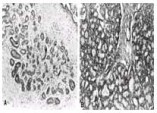
The developing breast at puberty has been described in detail by Russo and Russo as growing and dividing ducts that form club-shaped terminal end buds. Growing terminal end buds form new branches, twigs, and small ductules termed alveolar buds. Alveolar buds subsequently differentiate into the terminal structure of the resting breast, named the acines by German pathologists or the ductule by Dawson. The term alveolus is best applied to the resting secretory unit and acines to the fully developed secretory unit of pregnancy and lactation.
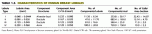
TABLE 3. Characteristics of Human Breast Lobules. Lobules develop during the first few years after menarche. The alveolar buds cluster around a terminal duct and form type I (virginal) lobules, comprising approximately 11 alveolar buds lined by two layers of epithelium. Full differentiation of the mammary gland proceeds through puberty, takes many years, and may not be fully completed if interrupted by pregnancies.
Detailed microanatomic studies of the breast have shown the presence of three distinct types of lobules. Type I lobules, previously described, are the first generation of lobules that develop just after the menarche. The transition to type II and type III gradually results from continued sprouting of new alveolar buds. The characteristics of the four lobular types are described in Table 1-3 and Table 1-4.

TABLE 4. Proliferative Activity of Human Breast Terminal Duct–Lobular Unit Components as Measured by DNA-Labeling Index
Microscopic Anatomy of the Adult Breast
Written and revised by
Gerald Hurowitz, M.D.
Our doctors write and review articles for accuracy and keep them up to date.
health.am provides general information, not medical advice. Always consult a qualified health professional about your own health.
Explore health topics
More in this topic
Cancer → News
Early MRI screening reduces risk of breast cancer death for survivors of childhood HL
Researchers at Princess Margaret Cancer Centre have confirmed in a screening effectiveness study that early screening with MRIs can reduce breast cancer mortality for female survivors of childhood Hodgkin's lymphoma…
3 March 2016
 News
Two forms of radiosurgery for brain metastases are equally effective
While two advanced radiosurgery approaches - Gamma Knife and RapidArc® - offer different strengths, they are equally effective at eradicating cancer in the brain, say researchers at Sidney Kimmel Cancer Center. Their…
25 February 2016
 News
Cancer treatment: Therapeutic approach gives hope for the treatment of multiple myeloma
A new therapeutic approach tested by a team from Maisonneuve-Rosemont Hospital (CIUSSS-EST, Montreal) and the University of Montreal gives promising results for the treatment of multiple myeloma, a cancer of the bone…