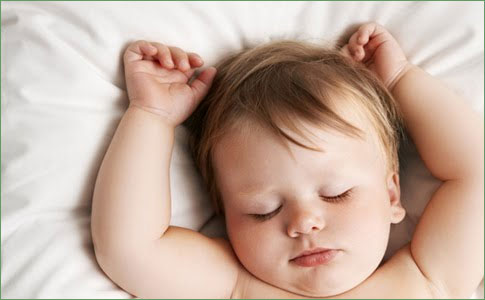
Sleep-Wake Transition Disorders

Key points
- Sleep-wake transition disorders occur in the transition from wakefulness to sleep or vice versa.
- In this chapter I have attempted to describe the assessment, phenomenology, and treatment of the more common childhood sleep disorders.
- Because these disorders most often occur in otherwise healthy persons, they are considered variants of normal physiology rather than indicators of pathophysiology.
- The term rhythmic movement disorders is preferred to the term head banging.
Sleep-wake transition disorders occur in the transition from wakefulness to sleep or vice versa. Because these disorders most often occur in otherwise healthy persons, they are considered variants of normal physiology rather than indicators of pathophysiology. The term rhythmic movement disorders is preferred to the term head banging. Sleep starts, body rocking, sleep talking, and nocturnal leg cramps also are included in this category. Klackenberg (1982) reported that at age 9 months, 58% of infants exhibited at least one of these repetitive behaviors (head turning, head banging, or rocking). The prevalence of these activities decreased to 33% by age 18 months and to 22% by age 2 years. When intense rocking or head banging persists and is disruptive, parents may view the behavior as a problem. Most often, providing guidance and support for the parent suffices. The only concern should be in securing the child's safety from self-injury.
Conclusions
In this chapter I have attempted to describe the assessment, phenomenology, and treatment of the more common childhood sleep disorders. The disorders have been viewed in a developmental framework from infancy to adolescence and placed in the structure of sleep-wake state organization. The large majority of dyssomnias that affect infants, children, and adolescents can be diagnosed from a careful history and physical examination. Sleep logs are useful to place a disorder in a temporal and chronological context as well as to gauge severity and the efficacy of treatment. Sleep laboratory investigations should be considered for all dyssomnias that are characterized by excessive somnolence. The dyssomnias associated with some neurological diseases and with developmental delay often respond better to behavioral management strategies than to hypnotic medications. Those sleep disorders that are associated with primary psychiatric or medical conditions have not been reviewed specifically. Treatment of the primary condition often leads to improvement of the sleep problem. The principles reviewed for the management of primary dyssomnias also can be useful for such secondary dyssomnias.
References
Written and revised by
Andrey Nailor, M.D.
Our doctors write and review articles for accuracy and keep them up to date.
health.am provides general information, not medical advice. Always consult a qualified health professional about your own health.
Explore health topics
More in this topic
Sleep → Guide
Awareness of sleep disorders
Sleep occupies approximately 8h of each 24-h cycle, but much less attention has been paid to the medical problems during this phase of life than to those that occur during wakefulness. There are several reasons for…
19 August 2007
 Guide
Treatment of obesity - Obesity and sleep disorders
Behavioural treatments These include cognitive behavioural therapy which aims to alter attitudes about comfort eating, and anxiety about lack of food availability and the moral duty to finish meals. There is, however, a…
19 August 2007
 Guide
Obesity and sleep disorders
Obesity is related to the following sleep conditions. Sleep deprivation and fragmentation Sleep deprivation and fragmentation lead to insulin resistance and other hormonal and autonomic changes with the result that…
19 August 2007