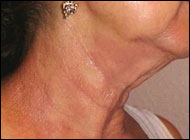
Psoriasis tied to depression, suicide
Key points
- People with the skin condition psoriasis are more likely to be depressed, anxious and thinking about suicide, than those without the problem, according to a new study of British adults.
- Researchers found that nearly one in ten people with mild psoriasis had been depressed at some point - more than twice as many as among people without the disease.
- "Psoriasis has a profound impact on patients' well being," said Dr.
- Jerry Bagel, a psoriasis expert who wasn't involved in the study, said the results weren't surprising.
People with the skin condition psoriasis are more likely to be depressed, anxious and thinking about suicide, than those without the problem, according to a new study of British adults.
Researchers found that nearly one in ten people with mild psoriasis had been depressed at some point - more than twice as many as among people without the disease. And in severe cases, the depression rate rose even further.
"Psoriasis has a profound impact on patients' well being," said Dr. Joel Gelfand, of the University of Pennsylvania in Philadelphia, who worked on the study. "It's likely that there are tens of thousands of extra cases of depression and suicidal thoughts due to psoriasis."
Dr. Jerry Bagel, a psoriasis expert who wasn't involved in the study, said the results weren't surprising.
"People with psoriasis are wearing long-sleeve clothing in August," Bagel, of the Psoriasis Treatment Center of Central New Jersey, told Reuters Health.
"You get a 17-year-old girl with psoriasis on three percent of her body, and she is going to hide," he added.
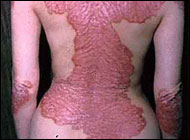
Psoriasis affects up to three in 100 Americans, according to the new report, published in the Archives of Dermatology. It results from overactive immune cells, which attack healthy skin and cause red, itchy patches and rapid build-up of scales.
Almost three-quarters of people with the condition say it makes them feel angry and self-conscious, a recent survey from the National Psoriasis Foundation shows.
For the new study, the researchers tapped into a population-wide British database of electronic medical records from 1987 to 2002, including roughly 146,000 people with mild psoriasis, 4,000 with severe psoriasis, and 767,000 psoriasis-free individuals.
Compared to people without the condition, those with psoriasis were at higher risk of developing psychological problems, especially at younger ages.
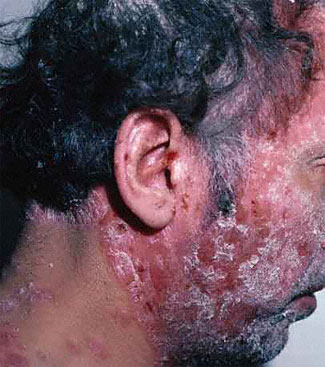
About 26 per 1,000 afflicted individuals per year were diagnosed with depression, 21 with anxiety and one with suicidal thoughts and actions.
This means that about 10,400 diagnoses of depression may be chalked up to psoriasis each year in the UK, according to the report. For anxiety and suicide fantasies, the numbers are 7,100 and 340, respectively.
Exactly what accounts for the link between mental health and psoriasis is unclear. There is the obvious social embarrassment, traditionally considered at the root of the drinking and obesity problems that sometimes accompany the condition.
But there could also be another, less obvious explanation.
Written and revised by
Andrey Nailor, M.D.
Our doctors write and review articles for accuracy and keep them up to date.
health.am provides general information, not medical advice. Always consult a qualified health professional about your own health.
Explore health topics
More in this topic
Skin, Hair & Beauty → Guide
Signs of depression
Depression is common amongst acne sufferers. How do you know if you or someone you care about is suffering from depression and needing help? Look out for the following signs: Persistent sad, anxious or "empty" mood.…
26 April 2005
NewsSecond Course of Alefacept Often Successful for Plaque Psoriasis Even if First Course Fails
Chronic plaque psoriasis patients who do not improve on their initial treatment with the targeted agent alefacept appear to respond well to a second course of treatment, according to research presented February 19th at…
22 February 2005
NewsExtended Raptiva therapy safe, effective for psoriasis
Treatment with the relatively new drug Raptiva for 12 weeks has been shown to be a safe and effective treatment for moderate-to-severe chronic psoriasis. Now, new research indicates that the benefits are even more…