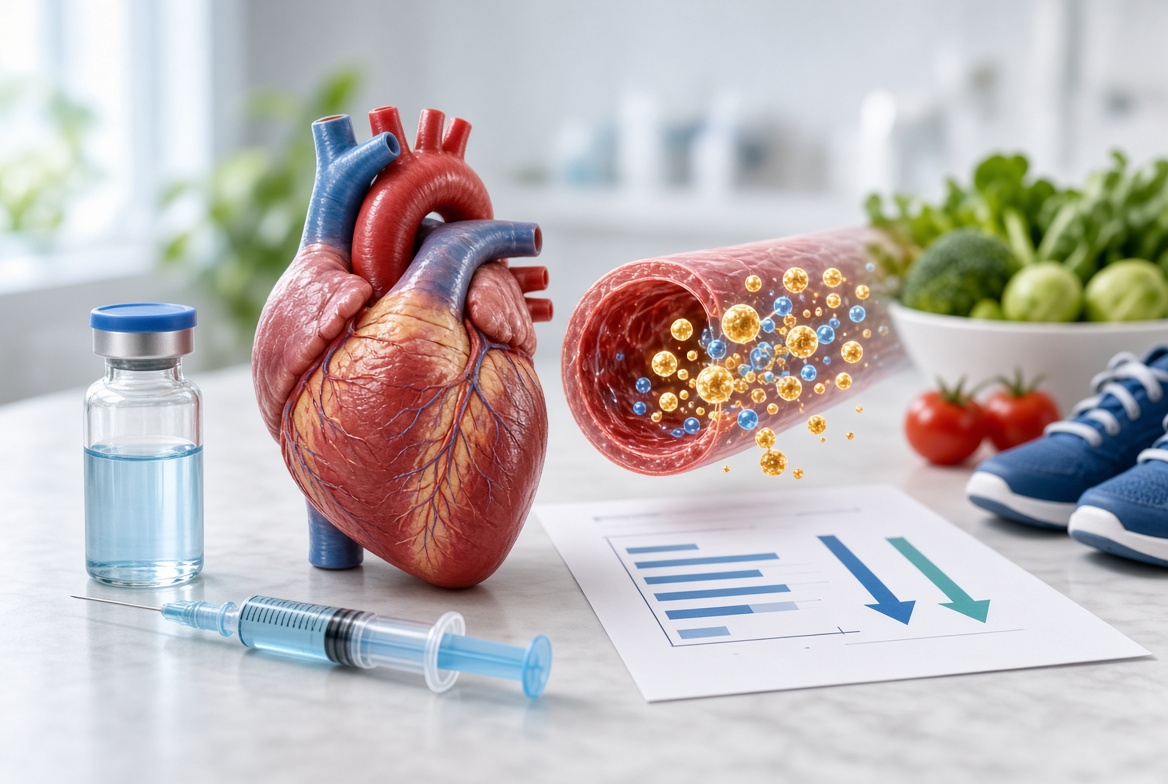
What are lipid-altering medications?

Key points
- Lipid altering medications are used in lowering blood levels of undesirable lipids such as LDL cholesterol and triglycerides and increasing blood levels of desirable lipids such as HDL cholesterol.
- Several classes of medications are available in the United States, including HMG CoA reductase inhibitors (statins), nicotinic acid, fibric acid derivatives, and medications that decrease intestinal cholesterol absorption (bile acid sequestrants and cholesterol absorption inhibitors).
- Some of these medications are primarily useful in lowering LDL cholesterol, others in lowering triglycerides, and some in elevating HDL cholesterol.
- Medications also can be combined to more aggressively lower LDL, as well as in lowering LDL and increasing HDL at the same time.
Lipid altering medications are used in lowering blood levels of undesirable lipids such as LDL cholesterol and triglycerides and increasing blood levels of desirable lipids such as HDL cholesterol. Several classes of medications are available in the United States, including HMG CoA reductase inhibitors (statins), nicotinic acid, fibric acid derivatives, and medications that decrease intestinal cholesterol absorption (bile acid sequestrants and cholesterol absorption inhibitors). Some of these medications are primarily useful in lowering LDL cholesterol, others in lowering triglycerides, and some in elevating HDL cholesterol. Medications also can be combined to more aggressively lower LDL, as well as in lowering LDL and increasing HDL at the same time.
| Medication class | Medication examples | Effects on blood lipids |
| statins | Pravachol, Mevacor, Lipitor, Lescol, Crestor, Zocor | Most effective in lowering LDL, mildly effective in increasing HDL, mildly effective in lowering triglycerides |
| Nicotinic acid (Niacin) | Niacin, Niaspan, Slo-Niacin | Most effective in increasing HDL, effective in lowering triglycerides, mildly to modestly effective in lowering LDL |
| Fibric acid | Lopid, Tricor | Most effective in lowering triglycerides, effective in increasing HDL, minimally effective in lowering LDL |
| Bile acid sequestrants | Questran, Welchol, Colestid | Mildly to modestly effective in lowering LDL, no effect on HDL and triglycerides |
| Cholesterol absorption inhibitors | Zetia | Mildly to modestly effective in lowering LDL, no effect on HDL and triglycerides |
| Combining nicotinic acid with statin | Advicor (lovastatin+niaspan) | Effective in lowering LDL and triglycerides and increasing HDL |
| Combining a statin with an absorption inhibitor | Vytorin (Zocor + Zetia) | Synergistic in lowering LDL and effective in lowering LDL with low doses of each ingredient |
Written and revised by
Gerald Hurowitz, M.D.
Our doctors write and review articles for accuracy and keep them up to date.
health.am provides general information, not medical advice. Always consult a qualified health professional about your own health.
Explore health topics
More in this topic
Heart & Blood Vessels → News
Emerging vascular risk factors in women: Any differences from men?
The incidence and severity of both traditional and emerging cardiovascular disease (CVD) risk factors as well as the response to treatment may differ between genders. In this narrative review, several emerging CVD risk…
6 February 2016
 News
Study shows minorities had lower risk of coronary heart disease than whites
In a study of more than 1.3 million Kaiser Permanente members in Northern California that stretched over 10 years, researchers found that blacks, Latinos and Asians generally had lower risk of coronary heart disease…
29 January 2016
 News
Finding the right antithrombotic (anti-clotting) drug for you
A new blood clotting analysis system designed in Japan makes it easier to determine the effects of taking one or more antithrombotic (anti-clotting) drugs. Myocardial infarction, arrhythmia (atrial fibrillation),…