Medical Nutrition Treatment in the Management of Type 2 Diabetes
Key points
- Goals of Nutrition Therapy for Type 2 Diabetes Nutritional management aims to help optimize metabolic control and reduce risk factors for chronic complications of diabetes.
- Many individuals with type 2 diabetes are overweight.
- Nevertheless, even modest weight loss of under 10% body weight improves insulin sensitivity and glucose tolerance and reduces lipid levels and blood pressure.
- German Diabetes Research Center, Heinrich-Heine University, Düsseldorf, Germany Jim I.
Goals of Nutrition Therapy for Type 2 Diabetes
Nutritional management aims to help optimize metabolic control and reduce risk factors for chronic complications of diabetes. This includes the achievement of blood glucose and glycosylated hemoglobin (HbA1c) levels as close to normal as is safely possible, and lipid and lipoprotein profiles, as well as blood pressure values, that may be expected to reduce the risk of macrovascular disease. Individual nutritional needs and the quality of life of the person with diabetes also have to be considered when defining nutritional objectives (7 - 10,14,16,36).
The nutritional recommendation for an individual patient should include practical advice regarding appropriate food choices and quantities. However, it should be stressed that nutritional recommendations for people with type 2 diabetes are similar to those aimed at the population as a whole for the promotion of good health and the prevention of metabolic disorders and vascular complications. Thus, the food for persons with diabetes should not differ appreciably from that recommended for other family members (37 - 39).
Energy Restriction and Body Weight
Many individuals with type 2 diabetes are overweight. Insulin resistance increases with increasing body weight, and obesity may also aggravate hyperlipidemia and hypertension (Fig. 1).
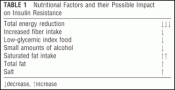
Many short-term studies have demonstrated that weight loss, especially of intraabdominal fat, in persons with type 2 diabetes is associated with decreased insulin resistance, improved glycemic control, reduced blood pressure and improvement of dyslipidemia (Table 1) (35,40).
Thus, energy restriction and weight loss are important therapeutic objectives for obese individuals with type 2 diabetes (7,8,10).
However, long-term data are still scarce to assess the extent to which metabolic improvements by means of weight loss can be maintained in people with type 2 diabetes. Long-term weight loss is often difficult to achieve, and it has to be considered that genetic factors may play an important role in determining body weight.
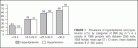
FIGURE 1 Prevalence of hyperlipidemia and hypertension (n %) by categories of BMI (kg m - 2) in a sample of 1988 persons with diabetes [930 male, 1058 female; mean age 57 - 13 years; mean diabetes duration 8 years].
Environmental factors also often make losing weight difficult for those genetically predisposed to obesity.
Written and revised by
Gerald Hurowitz, M.D.
Our doctors write and review articles for accuracy and keep them up to date.
health.am provides general information, not medical advice. Always consult a qualified health professional about your own health.
Explore health topics
More in this topic
Diabetes & Hormones → News
Use of Stem Cell Transplantation is Beneficial Treatment of Type 1 Diabetes
A therapy that includes stem cell transplantation induced extended insulin independence in patients with type 1 diabetes mellitus, according to a preliminary study in the April 11 issue of JAMA. Type 1 diabetes mellitus…
11 April 2007
NewsCan we prevent type 1 diabetes by modifying infant nutrition?
Within the next 10 years the EU-funded Diabetes Prevention study, part of an international study called TRIGR (Trial to Reduce IDDM in the Genetically at Risk), coordinated at the University of Helsinki, Finland, will…
22 November 2006
 News
Canadian researchers close in on new treatments for type 2 diabetes
Researchers funded by the Canadian Institutes of Health Research (CIHR) and the Canadian Diabetes Association (CDA) have identified an unsuspected role of a protein named SHP-1 that could constitute a new therapeutic…