
What motivates kids to do their homework?
Key points
- Why do some students work hard on their homework, while others do not?
- Students' beliefs about how well they can do the homework assignment and the intrinsic value in it, as well as their general interest in the subject, also predict homework behavior.
- The findings are based on responses to questionnaires on math homework and class work posed to 3,283 mostly Caucasian students from diverse educational and social backgrounds in grades five, seven, eight and nine in 11 urban schools in Germany.
- Homework is often a battlefield for students, parents, teachers and administrators.
Why do some students work hard on their homework, while others do not? Results of a survey of students attending middle schools and high schools in Germany suggest that students' general level of conscientiousness predicts how much effort goes into their homework.
Students' beliefs about how well they can do the homework assignment and the intrinsic value in it, as well as their general interest in the subject, also predict homework behavior.
The findings are based on responses to questionnaires on math homework and class work posed to 3,283 mostly Caucasian students from diverse educational and social backgrounds in grades five, seven, eight and nine in 11 urban schools in Germany.
Homework is often a battlefield for students, parents, teachers and administrators. The current findings suggest that parents and teachers could help students boost the effort they put into homework by improving students' beliefs that they can do well, increasing their interest in the subject and providing a sense that the assignments are useful, researchers say.
"For many of the older students, it may be less a question of whether they are able to do the homework than of whether there is any point in doing it," note Dr. Ulrich Trautwein of the Max Planck Institute for Human Development in Berlin and colleagues in the current issue of Child Development.
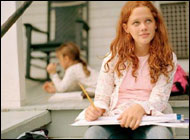
Age also emerged as a key factor in attention to homework, with students in lower grades showing greater effort and motivation than those in higher grades. "Homework effort was highest in grade five and lowest in grade nine," Trautwein and colleagues report. It's possible, they suggest, that studiousness in the upper grades may conflict with boys and girls gender identities in adolescence.
Time spent on homework was unrelated to homework effort and motivation. Thus, "homework time should not be used as a measure of students' investment in school," Trautwein and colleagues contend. "Interestingly," they say, there was a significant increase in homework time between grades 5 and 7 but not between grades 7 and 9.
In general, the students seemed to have more interest and motivation for classwork than for homework. However, while highly conscientious students reported giving homework and classroom work an equal amount of attention, less conscientious students reported putting less effort into their homework than into their classwork.
Parents confirmed that their children spend a substantial amount of time working on homework in core subjects. According to students' reports, homework is one of the most "aversive elements" of school, Trautwein and colleagues note in their report.
The jury is still out on whether students' who are assigned a lot of homework outperform their peers who get less homework, they also note.
Written and revised by
Gerald Hurowitz, M.D.
Our doctors write and review articles for accuracy and keep them up to date.
health.am provides general information, not medical advice. Always consult a qualified health professional about your own health.
Explore health topics
More in this topic
Children's Health → News
Teasing tied to less physical activity among kids
Children who are teased while playing sports tend to have a worse quality of life than their non-teased peers, a new study suggests. Some of them may also become less active over time. "Teasing not only influences…
21 December 2013
 News
TV ads nutritionally unhealthy for kids, study finds
The nutritional value of food and drinks advertised on children's television programs is worse than food shown in ads during general air time, according to University of Illinois at Chicago researchers. The study is…
18 December 2013
NewsPay kids to eat fruits & veggies with school lunch
The good news: Research suggests that a new federal rule has prompted the nation’s schools to serve an extra $5.4 million worth of fruits and vegetables each day. The bad news: The nation’s children throw about $3.8…
18 December 2013


