Study confirms that living with a smoker increases absenteeism in school children
Key points
- Children who live in households where they are exposed to tobacco smoke miss more days of school than do children living in smoke-free homes, a new nationwide study confirms.
- "Among children ages 6 to 11 who live with smokers, one quarter to one third of school absences are due to household smoking," says Douglas Levy, PhD, of the Mongan Institute for Health Policy at MGH, the paper's lead author.
- The authors note that one-third of U.S. children live with at least one smoker, and more than half of those aged 3 to 11 have detectable levels of a blood marker for tobacco exposure.
- Of the 3,087 children whose information was analyzed for this study, more than 14 percent lived in a home with at least one person who smoked in the house – 8 percent lived with one household smoker and 6 percent with two or more – which represents 2.6 million children nationwide.
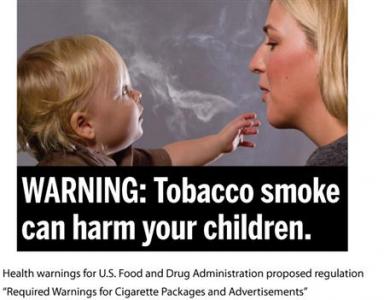
Children who live in households where they are exposed to tobacco smoke miss more days of school than do children living in smoke-free homes, a new nationwide study confirms. The report from investigators at Massachusetts General Hospital (MGH) – which finds these children have higher rates of respiratory illnesses that can be caused by second-hand smoke and details the probable economic costs of their increased school absence – has been released in the online edition of Pediatrics.
"Among children ages 6 to 11 who live with smokers, one quarter to one third of school absences are due to household smoking," says Douglas Levy, PhD, of the Mongan Institute for Health Policy at MGH, the paper's lead author. "On a national basis these absences result in $227 million in lost wages and time for caregivers or their employers."
The authors note that one-third of U.S. children live with at least one smoker, and more than half of those aged 3 to 11 have detectable levels of a blood marker for tobacco exposure. Second-hand smoking has been shown to increase incidence of ear infections and several respiratory conditions, and school absenteeism is an accessible measure of serious illness in children. Earlier studies of the relationship between lost school days and household smoking have focused on local populations and did not evaluate the severity of the problem's impact. The MGH team analyzed data from the 2005 National Health Interview Study, an annual in-person survey of representative households nationwide.
Adults responding from households with schoolchildren ages 6 to 11 were asked to evaluate each child's general health and to answer the following questions:
* how many people smoked inside the home
* how many school days the child missed due to illness or injury during the previous year
* whether the child had three or more ear infections during the previous year
* whether the child had a chest cold or gastrointestinal illness during the preceding two weeks
* whether the child had been disgnosed with asthma, and if so, whether the child had any recent asthma attacks
Of the 3,087 children whose information was analyzed for this study, more than 14 percent lived in a home with at least one person who smoked in the house – 8 percent lived with one household smoker and 6 percent with two or more – which represents 2.6 million children nationwide. Children living with one in-home smoker had an average of 1.06 more days absent, and those living with two or more had 1.54 more days absent than did children living in homes where no one smoked indoors.
Illnesses associated with exposure to tobacco smoke – including ear infections and chest colds –accounted for 24 percent of absences in children living in homes where one person smoked indoors and 34 percent for those living in homes with at least two in-home smokers. Household smoking did not increase gastrointestinal illness, and while there also was no association with an asthma diagnosis or asthma attacks, the study sample may have included too few children with asthma to reflect smoke exposure's known role as an asthma trigger.
Written and revised by
David Cohen, M.D.
Our doctors write and review articles for accuracy and keep them up to date.
health.am provides general information, not medical advice. Always consult a qualified health professional about your own health.
Explore health topics
More in this topic
Children's Health → News
Environmental tobacco smoke drastically increases an infant's risk for developing allergic rhinitis
University of Cincinnati (UC) epidemiologists say it's environmental tobacco smoke-not the suspected visible mold-that drastically increases an infant's risk for developing allergic rhinitis by age 1. Commonly known as…
19 May 2006
 News
Study confirms that the children with dental decay are not underweight in comparison to their peers
New evidence from pediatric dentists at the University at Buffalo has shown that, contrary to previous findings, most young children with decayed "baby" teeth are not underweight, and actually may be overweight or at…
23 March 2006
NewsCommon genetic variation increases SIDS risk in African Americans
About five percent of deaths from SIDS (sudden infant death syndrome) in African Americans can be traced to defects in one gene and half of those deaths result from a common genetic variation that increases an infant's…