The Larynx - laryngeal cancers treatment
Key points
- Unique to this particular site of head and neck cancer, quality-of-life issues have been incorporated into treatment decision making more extensively than for other cancer sites.
- The larynx is divided into three subsites that form the basis for classifying laryngeal cancers.
- Considerable attention has been devoted to anatomic studies of the vascular and lymphatic compartments of the larynx.
- The true vocal cords present an effective boundary between supraglottic and subglottic lymphatic spread within the larynx.
Because of the prominent role the larynx plays in communication, swallowing, respiration, protection of the lower airway, and therefore, quality of life, the treatment of cancer of the larynx presents formidable dilemmas regarding the functional consequences of treatment in addition to the intrinsic threat to life posed by these cancers. Unique to this particular site of head and neck cancer, quality-of-life issues have been incorporated into treatment decision making more extensively than for other cancer sites. Cancer of the larynx is generally diagnosed at an earlier stage than are other head and neck sites, primarily owing to the early manifestation of symptoms. As a result, cure rates are generally higher than for other sites.
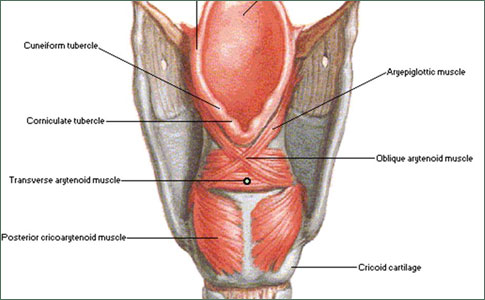
The larynx is divided into three subsites that form the basis for classifying laryngeal cancers. These separations exist because each site is associated with different risks of local spread, lymphatic metastasis and control rates. These differences exist as a result of differences in embryologic development, and vascular and lymphatic anatomy. The TNM staging for these subsites is listed in Table 90-13.
Considerable attention has been devoted to anatomic studies of the vascular and lymphatic compartments of the larynx. These studies have defined natural anatomic barriers to cancer spread within the larynx and have contributed to the development of select surgical procedures for partial laryngeal resections of certain cancers.
The true vocal cords present an effective boundary between supraglottic and subglottic lymphatic spread within the larynx. This separation breaks down with tumors involving the anterior or posterior commissures and with deeply invasive tumors that extend vertically across the true and false vocal cords (transglottic cancers). Normally, the internal perichondrium of the thyroid cartilage also presents an effective barrier to cancer spread. However, cancer involvement of the anterior commissure or transglottic extension is associated with invasion of the thyroid cartilage in 40% to 60% of cases.
Early diagnosis is critical for achieving high survival rates and larynx preservation. Most cancers that are diagnosed at an early stage of development arise in the glottic larynx. This is so because minimal changes in the mass of the vibrating vocal cord due to tumor growth result in changes in its vibrating characteristics and presents early as dysphonia or hoarseness. Supraglottic cancers are usually more advanced than glottic cancers at the time of diagnosis because they do not generally produce early symptoms of hoarseness. Rather, the earliest symptoms of a supraglottic cancer are usually sore throat, dysphagia, referred otalgia, or the development of a neck mass representing regional metastasis. Airway compromise may be an early symptom with subglottic cancer.
Modern clinical evaluation of laryngeal cancers includes fiberoptic laryngoscopy, direct laryngoscopy, CT, and MRI of the larynx and neck, as well as videostroboscopic analysis. The radiologic assessments are of value in assessing direct extension to the preepiglottic and paraglottic spaces of the larynx, detecting cartilage invasion and evaluating the soft tissues and lymph nodes of the neck. These studies have replaced conventional tomography and contrast laryngo-graphy. The precise evaluation of tumor extent still requires direct laryngoscopy under anesthesia. With large obstructive tumors, this may necessitate prior tracheostomy. In some patients with large obstructive lesions, debulking the tumor mass at the time of direct laryngoscopy can obviate the need for tracheostomy and thereby reduce the potential risk of tumor seeding of the tracheostomy site. Even with precise clinical evaluation, inaccurate estimation of tumor extent (usually underestimation) occurs in 30% to 40% of cases. Most often this involves failure to identify invasion of the laryngeal cartilage framework.
Written and revised by
Andrey Nailor, M.D.
Our doctors write and review articles for accuracy and keep them up to date.
health.am provides general information, not medical advice. Always consult a qualified health professional about your own health.
Explore health topics
More in this topic
Cancer → News
UGR scientists patent an effective drug for treating breast, colon, and skin cancers
Scientists from the University of Granada (UGR) have patented an effective drug for treating cancer stem cells (CSCs) in breast, colon, and skin cancers. The researchers have proved the anti-tumor effects of the drug on…
21 October 2015
 News
Adoption of streamlined breast cancer treatment has stagnated, study finds
Accelerated partial breast irradiation was designed to be a faster, more convenient, and potentially safer way for many women with breast cancer to reduce their mortality risk and help keep their cancer from returning…
10 October 2015
 News
Scientists pave way for diamonds to trace early cancers
Physicists from the University of Sydney have devised a way to use diamonds to identify cancerous tumours before they become life threatening. Their findings, published today in Nature Communications, reveal how a…