Patients who stop using statins after stroke increase risk of death
Key points
- Patients who stop taking cholesterol-lowering drugs within a year of surviving a stroke had a two-fold increased risk of death, researchers reported in Stroke: Journal of the American Heart Association.
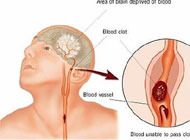
- Statins can benefit patients who have suffered an ischemic stroke (caused by a clot).
- “To the best of our knowledge, this is the first evidence linking discontinuation of statin therapy to increased death rates in stroke survivors who have no other clinical evidence of heart disease,” he and colleagues wrote.
- The observational study ran for four-and-a-half years at San Filippo Neri Hospital in Rome, in collaboration with the Institute for Clinical Research Santa Lucia Foundation of Rome.
Patients who stop taking cholesterol-lowering drugs within a year of surviving a stroke had a two-fold increased risk of death, researchers reported in Stroke: Journal of the American Heart Association.
Statins can benefit patients who have suffered an ischemic stroke (caused by a clot). However, stroke survivors often stop taking these drugs — an issue previously not studied in a clinical setting, said Furio Colivicchi, M.D., lead study author.
“To the best of our knowledge, this is the first evidence linking discontinuation of statin therapy to increased death rates in stroke survivors who have no other clinical evidence of heart disease,” he and colleagues wrote. Statins effectively lower blood levels of low-density lipoprotein cholesterol (LDL), known as “bad” cholesterol. The drugs have major side effects.
The observational study ran for four-and-a-half years at San Filippo Neri Hospital in Rome, in collaboration with the Institute for Clinical Research Santa Lucia Foundation of Rome. Researchers identified 631 consecutive stroke survivors (322 men and 309 women, average age 70 years). None had any other major illness, including heart disease. All patients were discharged from the hospital with orders to take a drug regimen including statin therapy.
Trained nurses interviewed the patients and researchers examined their primary care physicians’ records for 12 months after their stroke. Researchers recorded the date and possible reasons for any cardiovascular drug discontinuation.
By the end of the study, 38.9 percent of the patients — 246 patients — had stopped taking statins. The average time to discontinuation was 48.6 days.
Seventy-one patients (28.8 percent) cited mild side effects, the most common of which was indigestion. In the other 175 cases (71.2 percent), neither the patient nor the primary care physician could give specific medical reasons for discontinuation. Similar figures have been reported in studies in other Western countries, including the United States.
“Because medication costs are covered by the Italian National Health Service, except for a small co-pay, cost cannot be related to these patients discontinuing their prescribed therapy,” said senior author Carlo Caltagirone, M.D., Scientific Director of Santa Lucia Foundation. “In these studies the specific reasons for discontinuation are usually unknown, and they are difficult to analyze. However, contributing factors are probably related to patients’ and their healthcare providers’ behavior and beliefs, and probably also to features of the healthcare system itself.”
Compared to the entire study group, patients who stopped taking the statins were older (71.4 vs. 69.5, on average) and more often female.
Patients were less likely to stop taking the statins if they had diabetes or a previous stroke.
During the study, 116 patients died. Eighty percent of these deaths were attributed to cardiovascular causes. Statistical analysis determined that discontinuing statin therapy was independently and significantly associated with increased risk of death from any cause. Patients who had stopped taking statins within a year of stroke were more than twice as likely to die (2.78 hazard ratio) than others in the study group.
Written and revised by
Andrey Nailor, M.D.
Our doctors write and review articles for accuracy and keep them up to date.
health.am provides general information, not medical advice. Always consult a qualified health professional about your own health.