More stroke patients get clot-busting drugs
Key points
- Doctors are getting better at prescribing recommended drugs to stroke patients - at least in hospitals that participate in a program to ensure treatment guidelines are followed, a new study shows.
- As many as 95 percent of stroke patients with atrial fibrillation, a common heart rhythm disturbance, got blood thinners in 2010, researchers found.
- The findings are based on nearly 1,400 U.S. hospitals in the "Get With The Guidelines - Stroke" program, created by the American Heart Association and the American Stroke Association to make sure doctors are following up-to-date practices.
- "Hospitals participating in this program improved their ability to deliver appropriate stroke care," said lead researcher Dr.
Doctors are getting better at prescribing recommended drugs to stroke patients - at least in hospitals that participate in a program to ensure treatment guidelines are followed, a new study shows.
As many as 95 percent of stroke patients with atrial fibrillation, a common heart rhythm disturbance, got blood thinners in 2010, researchers found. That's up from 88 percent in 2003.
The findings are based on nearly 1,400 U.S. hospitals in the "Get With The Guidelines - Stroke" program, created by the American Heart Association and the American Stroke Association to make sure doctors are following up-to-date practices.
"Hospitals participating in this program improved their ability to deliver appropriate stroke care," said lead researcher Dr. William Lewis, a heart specialist at Case Western Reserve University School of Medicine in Cleveland, Ohio.
About 800,000 Americans suffer a stroke each year, according to the American Heart Association.
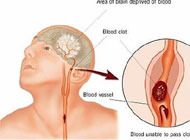
Some 20 percent of those stroke patients also have atrial fibrillation, which causes the heart's upper chambers to suddenly quiver chaotically instead of contracting normally. It's not life-threatening by itself, but in rare cases it can lead to blood clots forming in the heart. Those clots may then travel to the brain and cause a stroke.
Guidelines recommend that stroke patients with atrial fibrillation should be taking blood thinners such as warfarin (sold as Coumadin, Jantoven, Marfarin and other brand names) to help prevent another stroke.
While the drugs up the risk of severe bleeding in case of an injury, they lower stroke risk in people with atrial fibrillation by about eight percent.
The study, published in the American Heart Journal, found that hospitals that see a higher volume of stroke patients, as well as academic hospitals, were more likely to send the patients with atrial fibrillation home on blood thinners.
On average, hospitals certified as Joint Commission Primary Stroke Centers were twice as likely as the others to be following the guidelines.
Over the seven year period examined, the number of patients considered ineligible to receive blood thinners because of other problems, like being at a high risk for falls that could lead to bleeding, dropped dramatically - from 70 percent to 28 percent.
Longer membership in the Get With The Guidelines program was also linked to a slight increase in a hospital's performance.
Although the study didn't prove that the guidelines-promoting program is responsible for the improvements in care, Dr. Joshua Willey, a neurologist at Columbia University in New York, thinks it does actually lead to an improvement in the care you provide.
"Because someone is keeping track of how you're performing, you tend to perform better," said Willey, who was not part of the study.
Written and revised by
Gerald Hurowitz, M.D.
Our doctors write and review articles for accuracy and keep them up to date.
health.am provides general information, not medical advice. Always consult a qualified health professional about your own health.