
Aussie women have highest rising obesity rate
Key points
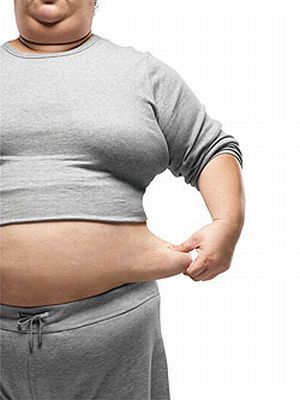
- AUSTRALIAN women have the fastest rising obesity rate and are tipping the scales as one of the heaviest nations on the planet.
- For the first time Australian women are close to matching America's obesity level prompting health experts to warn women over 30 years of age that they can no longer be complacent about gaining weight, The Daily Telegraph reports.
- When compared with the US, China and the UK, Australian women's body mass index - a calculation of weight divided by height - is rising faster than other nations, research has found.
- The study measured the top 5 per cent of obese women in Australia at age 30 and found an average BMI score of 37.7.
AUSTRALIAN women have the fastest rising obesity rate and are tipping the scales as one of the heaviest nations on the planet.
For the first time Australian women are close to matching America's obesity level prompting health experts to warn women over 30 years of age that they can no longer be complacent about gaining weight, The Daily Telegraph reports.
When compared with the US, China and the UK, Australian women's body mass index - a calculation of weight divided by height - is rising faster than other nations, research has found.
The study measured the top 5 per cent of obese women in Australia at age 30 and found an average BMI score of 37.7.
The index's increase over 10 years has been more than double the international average.

With such a high rate of increase the nation's health experts believe our level of obesity has already caught up to America - where the top 5 per cent of women averaged a BMI score of 42.5.
The most critically obese are defined by the World Health Organisation as having a BMI of more than 34.9.
The research, published in the American Journal of Clinical Nutrition, has alarmed health professionals even though they have known women have been putting on more weight than men in the past 10 to 15 years.
Institute of Obesity, Nutrition and Exercise director Professor Ian Caterson said efforts to combat women's obesity had been overshadowed by efforts to combat childhood obesity.
"What we have known is that for the past five years, people have been gaining weight and they are women aged between 25 and 35," he said.
"What we are worried about is the next generation will be worse than the current one and this research shows it."
While there has been an epidemic of childhood obesity, adults have also been piling on the kilos.
Newcastle University associate professor in nutrition and dietetics Dr Clare Collins said because weight gain was gradual, people did not notice it.
"On average, a person every year will gain up to 300g," she said.
"I don't think the average person realises the extent of the problem. What is alarming is the sheer numbers of people who are getting obese and moving into those high figures.
"We are going to run out of health services for people. Obesity is the biggest driver of cancer in the world."
Experts believe women gain extra weight after 30 due to lifestyle changes.
--
Written and revised by
Andrey Nailor, M.D.
Our doctors write and review articles for accuracy and keep them up to date.
health.am provides general information, not medical advice. Always consult a qualified health professional about your own health.
Explore health topics
More in this topic
Women's Health → News
New scientific review suggests some women may benefit from considering use of S-equol to ease menopause symptoms
The investigational S-equol nutritional supplement may be a viable agent to alleviate certain menopause symptoms, such as hot flashes, according to a new peer-reviewed article in the March Journal of Women's Health (1).…
31 March 2015
 News
Educated women choosing to be mothers without marrying their spouses
In Latin America, consensual (common-law) unions are traditionally associated with poorer or indigenous populations. But recent research is turning this conventional wisdom on its head, finding that that in the past 30…
20 March 2015
 News
Can breastfeeding women have menopause-like symptoms?
After giving birth, a woman's estrogen levels drop to lower than usual levels, and while they return to the normal range relatively quickly among women who are not breastfeeding, this hypoestrogenic state may continue…






