
Killer bacteria claims victims in Germany, Sweden
Key points
- A killer bacteria linked to contaminated cucumbers claimed a 15th victim in Germany on Tuesday and its first fatality abroad when a Swedish woman who had been traveling in Germany died, authorities said.
- One of the largest E.coli outbreaks of its kind, it has also made more than 1,000 people ill in Germany as well as people from Spain, Sweden, Britain, Denmark, France and the Netherlands who had recently been in Germany.
- It has also caused diplomatic tension between Germany and countries such as Spain, France and Russia.
- The E. coli pathogen has been identified on cucumbers imported from Spain, but it is not clear if they were contaminated there, during transport, or possibly in Germany.
A killer bacteria linked to contaminated cucumbers claimed a 15th victim in Germany on Tuesday and its first fatality abroad when a Swedish woman who had been traveling in Germany died, authorities said.
One of the largest E.coli outbreaks of its kind, it has also made more than 1,000 people ill in Germany as well as people from Spain, Sweden, Britain, Denmark, France and the Netherlands who had recently been in Germany.
It has also caused diplomatic tension between Germany and countries such as Spain, France and Russia. The source of the virulent strain of the bacteria is unknown, authorities said. Most of the deaths have been in northern Germany.
The E. coli pathogen has been identified on cucumbers imported from Spain, but it is not clear if they were contaminated there, during transport, or possibly in Germany.
"The situation is tense but it can be dealt with," said Health Minister Daniel Bahr at a news conference late on Monday. He said he expected the number of cases to continue rising.
The German government has identified the disease as hemolytic-uremic syndrome (HUS), a serious complication of a type of E. coli known as Shiga toxin-producing E. coli (STEC).
Russia has banned vegetable imports from Germany and Spain and said it may expand the ban to all European Union member states, head of Russia's Federal Consumer Protection Agency Gennady Onishchenko was quoted by corporate-owned Interfax news agency as saying.
"If the situation does not change, we will ban all the European vegetable products," he said.
Spanish farmers are losing around 200 million euros ($286 million) per week in lost sales because of it, a farmers association said on Tuesday.
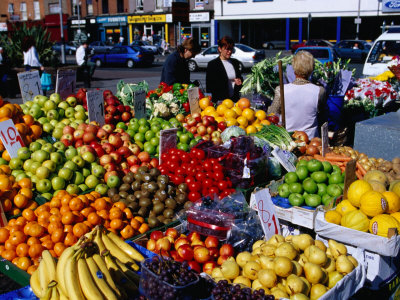
German authorities have warned consumers to avoid eating cucumbers, lettuces and tomatoes.
GROWING TENSION
Spain said on Monday there was no proof that cucumbers from its growers had caused the outbreak of E.coli in Germany and that it would be demanding to know why its farmers had been blamed.
Spanish media reported Germany, Denmark, Czech Republic, Luxembourg, Hungary, Sweden, Belgium and Russia are blocking entry of Spanish cucumbers.
In a further sign of growing tension in Europe, French Health Minister Xavier Bertrand demanded in a TV interview on Tuesday greater transparency from Spain and Germany over the mysterious outbreak after three people in France became ill.
"At first the German authorities were categorical," he said. "Today there are more and more questions arising. I want to know the origin (of the contamination)," Bertrand told France 2 television. "We need completely transparent information from the German authorities, and from the Spanish authorities as well.
Written and revised by
Andrey Nailor, M.D.
Our doctors write and review articles for accuracy and keep them up to date.
health.am provides general information, not medical advice. Always consult a qualified health professional about your own health.