
Mothers abused during childhood at risk for having low birth weight babies
Key points
- Mothers who were maltreated as children have increased risk for giving birth to low birth weight babies.
- The study also finds that childhood poverty and substance use during adolescence and pregnancy contribute to low birth weight, which is linked to infant mortality and chronic health problems.
- “Our findings suggest that a mother’s economic position in childhood and her experience of maltreatment during childhood have implications for her children born years later,” said Amelia Gavin, lead author and assistant professor in the UW School of Social Work.
- The results were published online March 14 in Journal of Adolescent Health.
Mothers who were maltreated as children have increased risk for giving birth to low birth weight babies. The findings, by researchers at the University of Washington, are the first to show that maternal maltreatment can affect the health of offspring.
The study also finds that childhood poverty and substance use during adolescence and pregnancy contribute to low birth weight, which is linked to infant mortality and chronic health problems.
“Our findings suggest that a mother’s economic position in childhood and her experience of maltreatment during childhood have implications for her children born years later,” said Amelia Gavin, lead author and assistant professor in the UW School of Social Work. “To our knowledge, this is the first study to show that maternal childhood maltreatment may lead to lower birth weight among later-born offspring.”
The results were published online March 14 in Journal of Adolescent Health.
Each year about 8 percent of babies in the United States are born weighing less than 2,500 grams, about five and a half pounds. Low birth weight – due to growth restriction in the womb or from being born prematurely – puts newborns at a greater risk for death before their first birthday. Babies with low birth weights who survive their first year are more likely to develop obesity, diabetes and other health risks later in life.
The rate of these births has increased since the mid-1980s even as prenatal care has improved.
“What matters most for healthy birth weights is the health status the mother brings into pregnancy,” Gavin said. “We’re trying to map pathways of early life exposures that lead to low birth weight.”
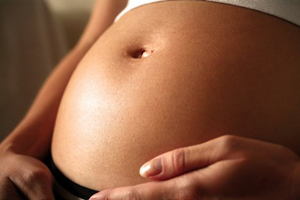
UW researchers are studying how early-life experiences affect the health of later-born offspring
Gavin and her co-authors examined data from an ethnically-diverse sample of 136 mothers participating in the Seattle Social Development Project since childhood. The long-term project, started by UW’s Social Developmental Research Group in 1981, looks for ways to enhance positive development and reduce drug use, delinquency and risky sexual behaviors among adolescents and young adults.
Looking at mothers who had children after age 18, Gavin’s analysis allowed her to see the extent to which mothers abused emotionally, sexually and physically before age 10 affected the birth weights of their children. She also considered the effects of childhood poverty and substance use – including binge drinking, smoking cigarettes and marijuana and other drug use – during high school and pregnancy.

Written and revised by
David Cohen, M.D.
Our doctors write and review articles for accuracy and keep them up to date.
health.am provides general information, not medical advice. Always consult a qualified health professional about your own health.
Explore health topics
More in this topic
Pregnancy & Fertility → News
Mother's immunosuppressive medications not likely to put fetus at risk
Women with chronic autoimmune diseases who take immunosuppressive medications during their first trimester of pregnancy are not putting their babies at significantly increased risk of adverse outcomes, according to a…
9 November 2013
 News
Babies born at 37 and 38 weeks are at higher risk for adverse health outcomes than those born at 39
Babies considered “early-term,” born at 37 or 38 weeks after a mother’s last menstrual period, may look as healthy as full-term babies born at 39-41 weeks, but a study published yesterday by University at Buffalo…
3 October 2013
NewsSome heart birth defects may increase children’s heart infection risk
Children with certain heart birth defects may have an increased risk for bacterial infection of their heart’s lining and valves, according to new research in Circulation: Journal of the American Heart Association. The…





