
Pregnancy after womb transplant
Key points
- Scientists have managed to produce a pregnancy in a womb transplanted into a mouse - bringing human ops a step closer.
- A paper published in the Journal of Endocrinology describes how scientists successfully transplanted a donor womb in a recipient mouse into which an embryo was successfully implanted.
- Dr Brдnnstrцm told BBC News Online: "This research is the first step towards treatment for women who have been totally infertile before.
- "More evidence of success in other animals will be required before it is justified to make such an attempt."
Scientists have managed to produce a pregnancy in a womb transplanted into a mouse - bringing human ops a step closer.
The work by Swedish scientists using mice is the first time a uterus from one animal has been transplanted into another and resulted in a successful pregnancy.
Around 15% of all couples are infertile. Most causes can be treated by in vitro fertilisation (IVF) and sperm injection (ICSI).
However, for women who have healthy ovaries, but have had a hysterectomy or uterus problems caused by injury or congenital conditions, a transplant is their only hope of carrying a child of their own.
At the moment, they can choose IVF surrogacy, where their egg and their partner's sperm can be used, but the baby carried by another woman. Technically, this is straightforward but it may not always be suitable for couples.
Comparison
A paper published in the Journal of Endocrinology describes how scientists successfully transplanted a donor womb in a recipient mouse into which an embryo was successfully implanted.
Dr Mats Brдnnstrцm of the Sahlgrenska Academy at Goteborg University in Sweden, is the researcher leading the work.
He told BBC News Online that since the paper had been published, the team had seen pregnancies in mice with donor uteruses which resulted in healthy babies.
"This will obviously give hope to those surgeons who are interested in carrying out a similar operation in humans "
Dr John Mills, British Fertility Society
In their original work, the team took a uterus from a donor mouse and transplanted it alongside the recipient mouse's own uterus.
This meant they could compare how both worked.
Three embryos were transferred into each uterus.
Three foetuses developed in the recipient's womb, and one in the donor womb - the first time this has happened.
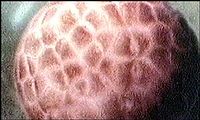
That pregnancy was halted so scientists could investigate what had happened within the mouse, but subsequent pregnancies went to full-term successfully.
Suitable donors
Dr Brдnnstrцm told BBC News Online: "This research is the first step towards treatment for women who have been totally infertile before.
"In the future we are aiming to achieve uterus transplantation in humans."
He said that could happen within "a couple of years".
Dr Brдnnstrцm added: "Suitable donors could be either a sister after she has had her own children or a mother since the chance for a good immune and blood type match would be high.
Written and revised by
David Cohen, M.D.
Our doctors write and review articles for accuracy and keep them up to date.
health.am provides general information, not medical advice. Always consult a qualified health professional about your own health.
Explore health topics
More in this topic
Pregnancy & Fertility → News
Studies presented at ACOG Annual Meeting reveal new information about weight and pregnancy
Two studies from the Perelman School of Medicine at the University of Pennsylvania reveal new information about the effects of weight gain and obesity among pregnant women. One study, examining weight gain during…
29 April 2014
 News
Pregnancy complications may be more common in immigrants from certain regions
Pregnant immigrants from Sub-Saharan Africa, Latin America and Caribbean islands may require increased monitoring during pregnancy, according to new research from St. Michael's Hospital. The study, published today in…
24 April 2014
 News
Stress in pregnancy linked to children's asthma risk
Stress during pregnancy brought on by events like divorce, job loss or death of a loved one appears to be linked to an increased risk of asthma and eczema among children. These findings, Dr. Petra Arck told Reuters…






