
Environmental Toxin Causes Heritable Adult-Onset Diseases
Key points
- A disease you are suffering today could be a result of your great-grandmother being exposed to an environmental toxin during pregnancy - and you may already have passed it along to your children.
- That's the conclusion reached by researchers at Washington State University, who have found that exposure to an environmental toxin during embryonic development can cause an animal, and almost all of its descendents, to develop adult-onset illnesses such as cancer and kidney disease.
- "It's a new way to think about disease," said Michael K.
- The work is reported in two papers in the September 14 issue of the journal Endocrinology.
A disease you are suffering today could be a result of your great-grandmother being exposed to an environmental toxin during pregnancy - and you may already have passed it along to your children.
That's the conclusion reached by researchers at Washington State University, who have found that exposure to an environmental toxin during embryonic development can cause an animal, and almost all of its descendents, to develop adult-onset illnesses such as cancer and kidney disease. Their discovery suggests that toxins may have played a role in the rapid increase in localized geographic areas of diseases that were previously thought to be caused primarily by genetic mutations.
"It's a new way to think about disease," said Michael K. Skinner, director of the Center for Reproductive Biology. "If this pans out, it gives us a host of new diagnostic and therapeutic tools." He said it also underscores the potential long-term hazards of environmental contaminants.
The work is reported in two papers in the September 14 issue of the journal Endocrinology. It builds on the group's 2005 finding that exposure to a toxin during embryonic development can cause fertility problems in male rats that are passed to later generations.
In the current study, Skinner and a team of WSU researchers exposed pregnant rats to an environmental toxin during the period that the sex of their offspring was being determined. At that stage of development, the genes of the male embryo's sex cells (future sperm) are uniquely vulnerable to reprogramming.
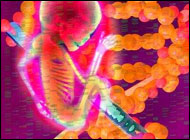
The researchers used vinclozolin, a fungicide commonly used in vineyards. Vinclozolin belongs to the class of compounds called endocrine disruptors, synthetic chemicals that interfere with the normal functioning of reproductive hormones. Skinner's group used higher levels of the toxin than are normally present in the environment, but their study raises concerns about the long-term impacts of such toxins on human and animal health, particularly in exposures during early- to mid-pregnancy (6 weeks to 5 months in humans). Further work will be needed to determine whether lower levels have similar effects.
Pregnant rats that were exposed to vinclozolin produced male offspring with low sperm counts and a high incidence of adult-onset diseases. Despite their low fertility, those males were still able to produce offspring. When they were mated with females that had not been exposed to the toxins, their offspring had the same problems. The effect persisted through four generations, with about 85 percent of the offspring in each generation developing conditions such as breast tumors, prostate disease, kidney disease, immune system abnormalities, and premature aging. Some mice came down with just one disease, but the majority suffered multiple ailments.
Written and revised by
Gerald Hurowitz, M.D.
Our doctors write and review articles for accuracy and keep them up to date.
health.am provides general information, not medical advice. Always consult a qualified health professional about your own health.
Explore health topics
More in this topic
Pregnancy & Fertility → News
Obesity drug has no effect on baby birthweights, study finds
Treating obese pregnant women with a diabetes drug does not stop their babies from being born overweight, a study has found. Doctors had hoped that the treatment would help to reduce obesity rates and lower the number…
11 July 2015
 News
Penn team identifies gene responsible for some cases of male infertility
In the most severe form of male infertility, men do not make any measurable levels of sperm. This condition, called azoospermia, affects approximately 1 percent of the male population and is responsible for about a…
2 July 2015
 News
Researchers design placenta-on-a-chip to better understand pregnancy
National Institutes of Health (NIH) researchers and their colleagues have developed a "placenta-on-a-chip" to study the inner workings of the human placenta and its role in pregnancy. The device was designed to imitate,…






