
Obesity: understanding the UK epidemic
Key points
- Studies about the predictors of obesity in the UK have shown that the poorest are most likely to be obese.
- What accounts for this seemingly counterintuitive state of affairs?
- Vexingly, research about the causes of obesity in high-income countries has shown that more deprived areas tend to have fewer outlets offering healthy foods.
- What's worse, a basket of healthy food would cost more in a poor part of east London, for example, than it would in somewhere like Fulham.
What does poverty look like in Britain? An emaciated young child, perhaps? Not exactly. Studies about the predictors of obesity in the UK have shown that the poorest are most likely to be obese. For example, one University of Glasgow study found that residents of an impoverished Glasgow neighbourhood were more than twice as likely to be obese compared with residents of an affluent neighbourhood only miles away. This pattern holds among children, teenagers and adults; men and women; and across ethnic groups.
What accounts for this seemingly counterintuitive state of affairs? In places such as Addis Ababa, the capital of Ethiopia (a low-income country that has had several serious famines in recent decades), the cheapest foods are the least calorie-dense; therefore, the poor systematically lack access to energy-rich foods, and have a higher likelihood of suffering from undernutrition and starvation. By contrast, in a city such as Liverpool, the cheapest foods are the most calorie-dense – kebabs, chips, crisps, puddings, soda, etc – so the poor there are more at risk from obesity.
Vexingly, research about the causes of obesity in high-income countries has shown that more deprived areas tend to have fewer outlets offering healthy foods.
What's worse, a basket of healthy food would cost more in a poor part of east London, for example, than it would in somewhere like Fulham. In this way, deprived areas in developed countries, termed "food deserts" in the academic literature about obesity, fundamentally limit the food choices that poor people can make, thereby promoting unhealthy lifestyles, and ultimately, obesity.
Another issue is what is termed "food insecurity", or lack of regular, dependable access to food. This can also promote obesity. Imagine that you didn't know where your next meal would come from, and you had a large meal in front of you at the time: what would you do? I would eat the whole thing (probably more than my fill), so that if, in fact, I didn't get a meal later, I would have eaten enough for the day. Now, what if the next meal did come (again, in the same setting of insecurity about where the next meal would come from)? A cycle of insecurity-based overconsumption can set in, ultimately leading to obesity.
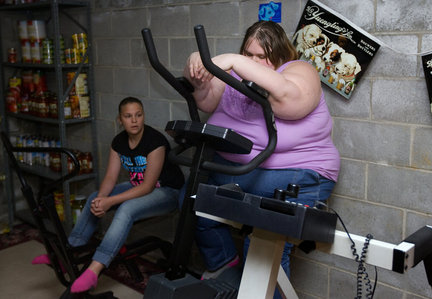
As the thought experiment I opened with perhaps demonstrated, obesity often doesn't register when we consider poverty. Conversely, conceptions of obesity typically fail to reflect the structural determinants of the condition: rather, we consider obesity as the accumulation of bad choices that individuals make at the dinner table or at snack time – too many biscuits and not enough exercise – without regard for the structures that influence the choices available to begin with.
While individual agency remains important, and some obese people do make unhealthy lifestyle choices, it doesn't make sense simply to always lay the blame on individuals. A study in the International Journal of Obesity offers poignant evidence: upon following over 11,000 Britons for 33 years, the findings showed that low parental social class at age seven was a significant predictor of obesity at age 33. If a factor as intractable as parental social class can influence obesity risk 26 years later, it is hardly helpful to blame every obese individual for his or her condition.
Written and revised by
Andrey Nailor, M.D.
Our doctors write and review articles for accuracy and keep them up to date.
health.am provides general information, not medical advice. Always consult a qualified health professional about your own health.
Explore health topics
More in this topic
Weight & Nutrition → News
Fat USA: Tackling the obesity epidemic
Obesity rates in Britain are soaring with one in five adults now classed as clinically obese. Despite Government warnings that we are turning into a nation of couch potatoes and risking obesity-related illnesses such as…
6 November 2004
 News
Heavy hitters: Obesity rate soars among professional baseball players
Major League Baseball players have become overwhelmingly overweight and obese during the last quarter century, say health researchers. David E. Conroy, Penn State professor of kinesiology, and colleagues looked at 145…
6 October 2016
NewsRap1, a potential new target to treat obesity
cientists at Baylor College of Medicine, the National Institutes of Health and Virginia Tech Carilion Research Institute have discovered a new mechanism in the mouse brain that regulates obesity . The study, which…
28 September 2016



