Study questions fish oil benefit before heart attack
Gerald Hurowitz, M.D.·Published 10 May 2013·9 min read
Key points
Fish oil supplements did not prevent heart problems in people who hadn't had a heart attack yet, in a large long-term study from Italy.
However, aspirin also increases your risk of severe stomach bleeding.
Increasing dietary omega-3 fatty acids from fish oils and decreasing omega-6 fatty acids, found in plant seed oils such as corn, safflower, and sunflower, is a way to reduce the risk of sudden death from irregular heart rhythms or heart attacks.
Daily supplementation with fish oils reduces heart rate variability.
Fish oil supplements did not prevent heart problems in people who hadn't had a heart attack yet, in a large long-term study from Italy.
The study - a gold-standard randomized, controlled trial - tested the effect of omega-3 fatty acids, which are found in oily fish such as tuna or sardines. Patients in the study had risk factors for heart disease, such as high blood pressure, high cholesterol, a history of smoking or narrowed arteries. But patients who had a heart attack in the past weren't allowed to enroll.
Five years after the study began, 11.7 percent of the 6,244 patients taking a capsule containing one gram of fish oil daily had died or been hospitalized for heart problems, compared to 11.9 percent for the 6,269 volunteers who instead received one gram of olive oil every day as a placebo.
The result, reported in the New England Journal of Medicine on Wednesday, is in sharp contrast to other research suggesting that omega-3 fatty acids can help those who have survived a heart attack or suffer from heart failure.
For people who haven't had a heart attack, though, the new findings "provide no evidence of the usefulness of (omega)-3 fatty acids for preventing cardiovascular death or disease," according to the research team, led by Dr. Maria Carla Roncaglioni of the Mario Negri Institute for Pharmacological Research in Milan.
She told Reuters Health in an email that the finding argues against the use of fish oil supplements, at least among Italians, who are already exposed to the Mediterranean diet. "There is no reason to prescribe fish oil supplementation unless they have a heart attack," she said.
Will Aspirin Prevent Your First Heart Attack?
Aspirin does prevent heart attacks and stroke. However, aspirin also increases your risk of severe stomach bleeding. The chances of preventing a heart attack and experiencing a dangerous stomach bleed is about equal. So, the benefit of aspirin for heart attack or stroke is questionable.
The major reason to give aspirin is to prevent heart attacks and strokes, and in healthy people this benefit is outweighed by the risk of bleeding. Aspirin is not the same as statins, which are known to reduce mortality in primary prevention. Aspirin doesn’t affect atherosclerosis; it modifies plaque rupture, which is the final step. That is why it works better in patients with established heart disease.
But, if you’ve suffered a heart attack or stroke before, or are taking medications for diabetes, aspirin’s positive effect on heart health is may be greater than it’s negative effect on stomach health.
The researchers did see a reduction in hospital admissions for heart failure and a preventive effect in women, but "both may be due to chance, although they are consistent with two findings from other studies," the researchers said.
Written and revised by
Gerald Hurowitz, M.D.
Our doctors write and review articles for accuracy and keep them up to date.
health.am provides general information, not medical advice. Always consult a qualified health professional about your own health.
Alice Lichtenstein, from Tufts University in Boston and a spokeswoman for the American Heart Association, told Reuters Health the findings from the new study are further evidence that, in general, "just giving a supplement on top of a non-heart-healthy lifestyle doesn't seem to help."
"We thought vitamin E pills were going to be the answer and that turned out to be wrong. We though beta carotene as an antioxidant was going to reduce cardiovascular disease . . . and that pill didn't work," she said in a telephone interview. "It's the whole package, not just popping one pill."
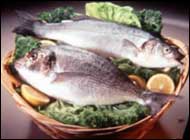
Fish oil can be obtained from eating fish or by taking supplements. Fish that are especially rich in the beneficial oils known as omega-3 fatty acids include mackerel, tuna, salmon, sturgeon, mullet, bluefish, anchovy, sardines, herring, trout, and menhaden. They provide about 1 gram of omega-3 fatty acids in about 3.5 ounces of fish.
Fish oil supplements are usually made from mackerel, herring, tuna, halibut, salmon, cod liver, whale blubber, or seal blubber. Fish oil supplements often contain small amounts of vitamin E to prevent spoilage. They might also be combined with calcium, iron, or vitamins A, B1, B2, B3, C, or D.
Fish oil is used for a wide range of conditions. It is most often used for conditions related to the heart and blood system. Some people use fish oil to lower blood pressure or triglyceride levels (fats related to cholesterol). Fish oil has also been tried for preventing heart disease or stroke. The scientific evidence suggests that fish oil really does lower high triglycerides, and it also seems to help prevent heart disease and stroke when taken in the recommended amounts. Ironically, taking too much fish oil can actually increase the risk of stroke.
Fish may have earned its reputation as “brain food” because some people eat fish to help with depression, psychosis, attention deficit-hyperactivity disorder (ADHD), Alzheimer’s disease, and other thinking disorders.
Some people use fish oil for dry eyes, glaucoma, and age-related macular degeneration (AMD), a very common condition in older people that can lead to serious sight problems.
The patients in the Italian study were treated by 860 general practitioners throughout the country. Their average age when they enrolled in the study was 64 years old.
{pagebreak}
Originally, the researchers had thought the main goal of their study would be to see how many people died or had a heart attack or stroke. But those events turned out to be less common than expected, probably because the patients "were rather intensively exposed to recommended preventive treatment (including healthy lifestyle habits) by their family physicians," Roncaglioni said.
Thus, the goal of the study was modified to count anyone who died or was admitted to the hospital for a heart-related cause.
Certain factors did seem to improve slightly more in the fish oil recipients, such as levels of fat and "good" cholesterol in the blood.
But other measures such as "bad" cholesterol, blood pressure and blood sugar remained similar in the fish oil and olive oil groups, and there was no difference in the proportion of patients in the two groups who needed heart medications.
Benefit of fish oils for heart disease treatment or prevention Fish oil supplements reduce the risk for heart disease by improving circulation, improving the function of the endothelium, the inner lining of arteries, reduce the risk of heart arrhythmias. Fish oils are rapidly incorporated into human heart cell phospholipids at the expense of arachidonic acid. This may lead to a reduction of arrhythmias or heart palpitations.
Benefit of fish oil to reduce the risk of sudden death
Increasing dietary omega-3 fatty acids from fish oils and decreasing omega-6 fatty acids, found in plant seed oils such as corn, safflower, and sunflower, is a way to reduce the risk of sudden death from irregular heart rhythms or heart attacks. One cause of sudden death is ventricular fibrillation, in which the heart contracts in a fast and chaotic rhythm that makes it unable to pump blood to the rest of the body. A number of factors including cigarette use, fasting, diabetes, hyperthyroidism or heart attack can trigger the release of fatty acids from adipose tissue.
Fats that we eat are stored in adipose (fat) tissue. When these fats are released from their storage sites, they become free fatty acids. But not all fatty acids are equal in their propensity to cause arrhythmias. High levels of omega-6 fatty acids may encourage arrhythmias if their levels aren’t balanced by omega-3 fatty acids.
Fish oils reduce heart rhythm problems and palpitations
Daily supplementation with fish oils reduces heart rate variability. Heart rate variability measures the variability in the intervals between heartbeats, with lower variability being associated with higher risks of heart disease and death. A normal heart does not always have the same time intervals between beats, but every so often (in cycles) the interval between cardiac beats changes; i.e. a little shorter, or longer. How frequent these variations occur are a measure of the effect of the nervous regulation of the heart. A sick heart losses this fine tuning.
Roughly two of every 100 patients died of heart disease, regardless of which group they were in. And roughly 10 of every 100 patients in each group needed to be hospitalized for a heart-related problem.
By the end of the study, 18 percent had stopped taking their fish oil and 19 percent had stopped taking their olive oil. When those volunteers were excluded from the study, there was still no significant difference between the groups in the risk of death or hospitalization for heart problems.
The rates of gastrointestinal side effects, cancer and bleeding were comparable in the two groups.
The U.S. Food and Drug Administration says olive oil has heart benefits of its own. Is it possible that using olive oil as the placebo in this study skewed the results by protecting the placebo group to some extent? Roncaglioni doesn't think so.
She said giving olive oil as a placebo probably did not bring down the overall rate of heart problems in that group because "one gram of olive oil corresponds to only 1/30th of the mean amount consumed in the Mediterranean diet," which would make it of very small benefit.
n–3 Fatty Acids in Patients with Multiple Cardiovascular Risk Factors
The Risk and Prevention Study Collaborative Group
The Risk and Prevention Study tested the hypothesis that n−3 fatty acids, which have been shown to be beneficial in patients who have had a myocardial infarction (in the Gruppo Italiano per lo Studio della Sopravvivenza nell'Infarto Miocardico [GISSI]–Prevenzione study) or heart failure (in the GISSI Heart Failure [GISSI-HF] study), would be effective in reducing cardiovascular risk among patients who were treated according to the standard of care and who had multiple cardiovascular risk factors or atherosclerotic disease but no previous myocardial infarction. Our findings provide no evidence of the usefulness of n−3 fatty acids for preventing cardiovascular death or disease in this population.
The consistently null effect across the various end points and subgroups does not suggest alternative interpretations, but a few epidemiologic observations are useful. The overall frequency of hard end points (particularly the rates of sudden death from cardiac causes and death from coronary causes), on which n−3 fatty acids showed a clear benefit in the GISSI–Prevenzione study, was substantially lower than expected, possibly reflecting a country-specific low cardiovascular-risk profile (particularly with regard to dietary habits) and the rather intensive exposure of our study population to preventive treatments with further improvement during the 5-year follow-up period. Death from cardiovascular causes at 5 years made up only 18.7% of the primary composite end point. In addition, hospital admissions for cardiovascular causes were concentrated among patients 65 years of age or older and were rarely predictive of death: only 7.7% of patients admitted to the hospital for a cardiovascular cause died from cardiovascular causes during the trial.
The only two significant results (a reduction in hospital admissions for heart failure with n−3 fatty acids and their preventive effect in women) must be considered conservatively. Both may be due to chance, although they are consistent with two findings from other studies: the beneficial effect of n−3 fatty acids in patients with heart failure in the GISSI-HF study and the decrease in nonfatal coronary events in patients with hypercholesterolemia, the majority of whom were women, in the Japan Eicosapentaenoic Acid Lipid Intervention Study (JELIS). Our results are more consistent with the null findings of the Outcome Reduction with an Initial Glargine Intervention (ORIGIN) trial, which tested supplementation with n−3 fatty acids in patients with dysglycemia. N Engl J Med 2013; 368:1800-1808May 9, 2013DOI: 10.1056/NEJMoa1205409


 News
 News
 News