
What Medications May Help My Child?
Key points
- Whether your child may benefit from psychiatric medication warrants close evaluation by her primary care physician or a psychopharmacologist (a psychiatrist who specializes in medication).
- Your child's primary care physician will remain a valuable resource not only during her initial weeks of medical stabilization, but throughout the entire treatment process and into recovery.
- Thus far, most research on the use of psychiatric medications for eating disorders has been conducted on adults.
- One of the most promising developments involves the role of antidepressants in individuals with bulimia nervosa.
Whether your child may benefit from psychiatric medication warrants close evaluation by her primary care physician or a psychopharmacologist (a psychiatrist who specializes in medication).
Thus far, most research on the use of psychiatric medications for eating disorders has been conducted on adults. Many medications that the U.S. Food and Drug Administration (FDA) has approved for the treatment of anxiety and depression are now prescribed for individuals with eating disorders. Having said that, we want you to understand that there are no magic bullets; that is, no drug has proven consistently effective in the treatment of these disorders.
One of the most promising developments involves the role of antidepressants in individuals with bulimia nervosa. Chances are you associate antidepressants with their mood-lifting ability; what you may not know is that these medications can also serve other functions. For example, many people with bulimia who have taken an antidepressant have reported that it helped them cut down on their binge eating episodes. The selective serotonin reuptake inhibitors (SSRIs) tend to be tolerated better and result in fewer problems than the older generations of antidepressants and are most frequently prescribed for bulimia. More research is needed to determine how SSRIs and other antidepressants reduce binge frequency. It is likely that a multitude of factors play a role.
A number of chemicals in the brain impact eating. Some of them (such as serotonin, dopamine, and norepinephrine) are known as neurotransmitters, and their function is to transport information between brain cells. Research shows that people with eating disorders tend to have an imbalance in the neurotransmitter serotonin, which influences mood, anxiety, and the sensation that one has eaten enough. Normally, after serotonin delivers a message, it travels back to the brain cell from which it came. An SSRI blocks this reuptake (return passage), keeping more serotonin active in the system to make up for what the patient may not be producing on her own.
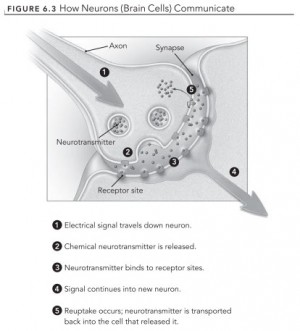
FIGURE 6.3 How Neurons (Brain Cells) Communicate
- Electrical signal travels down neuron.
- Chemical neurotransmitter is released.
- Neurotransmitter binds to receptor sites.
- Signal continues into new neuron.
- Reuptake occurs; neurotransmitter is transported back into the cell that released it.
Among the SSRIs is the well-known Prozac (fluoxetine), the only medication approved by the FDA for the treatment of bulimia nervosa. Individuals taking Prozac often do well on 60 milligrams per day, which is higher than the dose typically prescribed for the treatment of depression. If your child's doctor recommends an SSRI, he or she will probably start her on a small dose and increase it gradually while monitoring her response. The helpful effects of SSRIs tend to kick in by about six weeks.
Written and revised by
Andrey Nailor, M.D.
Our doctors write and review articles for accuracy and keep them up to date.
health.am provides general information, not medical advice. Always consult a qualified health professional about your own health.
Explore health topics
More in this topic
Mental Health → News
UAlberta research helps youth cope with anxiety, depression, and suicidal thoughts
Peter Silverstone knows that, of all his professional accomplishments, none are more important than the work he's doing right now. "I said to my wife that this is probably the most important thing I'll ever do in my…
3 June 2015
 News
Fine particulate air pollution associated with increased risk of childhood autism
Exposure to fine particulate air pollution during pregnancy through the first two years of a child's life may be associated with an increased risk of the child developing autism spectrum disorder (ASD), a condition that…
23 May 2015
 News
Stable overall suicide rate among young children obscures racial differences
The overall suicide rate among children ages 5 to 11 was stable during the 20 years from 1993 to 2012 but that obscures racial differences that show an increase in suicide among black children and a decrease among white…




