Treatment Strategies
Key points
- An appropriate treatment approach to depression begins with a consideration of the differential diagnostic possibilities outlined earlier in this chapter.
- That study indicated that indefinite maintenance medication appeared to be warranted among patients who initially had responded favorably.
- Since an acute transient disappointment reaction and a prodrome of a new psychotic episode are both possibilities when a new episode of depression appears in the course of schizophrenia, the prudent course is to react to such a new episode with increased frequency of surveillance.
- However, if the new onset of depression is the first harbinger of a new episode of psychosis, increased surveillance will allow this new episode to be caught quickly and "nipped in the bud" as much as possible through appropriate antipsychotic interventions.
An appropriate treatment approach to depression begins with a consideration of the differential diagnostic possibilities outlined earlier in this chapter. Obviously, since there are no available biological tests (except for the medical/organic conditions), or even psychological tests, that are known to be informative in drawing these diagnostic distinctions, these diagnoses must be made on a purely clinical basis.
Since an acute transient disappointment reaction and a prodrome of a new psychotic episode are both possibilities when a new episode of depression appears in the course of schizophrenia, the prudent course is to react to such a new episode with increased frequency of surveillance. If the episode is a transient disappointment reaction, it will soon resolve spontaneously, and no other intervention beyond nonspecific support is indicated.
However, if the new onset of depression is the first harbinger of a new episode of psychosis, increased surveillance will allow this new episode to be caught quickly and "nipped in the bud" as much as possible through appropriate antipsychotic interventions. For a neuroleptic-treated schizophrenia patient with a continuing episode of depression, the next consideration is whether the neuroleptic medication is contributing to the manifestations of depression.
This could occur on the basis of either the hypothesized neuroleptic-induced dysphoria state or the extrapyramidal side effects of akinesia or akathisia. A reduction of neuroleptic dosage would be the first choice of how to treat any of these conditions, if there is leeway to accomplish that safely. A trial of a so-called atypical antipsychotic agent also may be quite helpful in this situation. Otherwise, a full dose of an antiparkinsonian medication, built up in suitable gradations, is the treatment of choice for the possibility of neuroleptic-induced akinesia.
If the depressive syndrome is thought to be the product of akathisia and an antiparkinsonian medication trial proves not to be helpful, a benzodiazepine or beta-blocker trial can be attempted. After a transient disappointment reaction, prodrome of psychosis, and neuroleptic side effect have been eliminated, as best as possible, as the cause of a continuing state of postpsychotic depression in schizophrenia, a trial of treatment with an antidepressant medication should be considered as an adjunct to the patient's antipsychotic (and perhaps antiparkinsonian drug) regimen.
{embed="ref/61"}
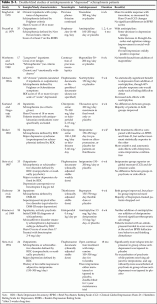
Table 21 shows the detailed results of the doubleblind, controlled studies that have examined this approach. Although the results are mixed, the studies that are methodologically the strongest are the ones that most support the efficacy and safety of an adjunctive antidepressant trial in this situation (Plasky 1991; Siris 1991, 1995, 2000). More favorable results were found among outpatients than among inpatients (Fisher exact test, P = 0.048 for the studies in Table 21), and less favorable results seemed to be obtained among patients who were prominently psychotic at the time of the adjunctive antidepressant trial (Kramer et al. 1989) than among those who were not psychotic at the time of the trial.
Written and revised by
David Cohen, M.D.
Our doctors write and review articles for accuracy and keep them up to date.
health.am provides general information, not medical advice. Always consult a qualified health professional about your own health.
Explore health topics
More in this topic
Mental Health → News
Smartphone App May Revolutionize Mental Health Treatment
New TAU technology provides professionals with immediate insight into behavioral patterns of patients Mental illness accounts for 90 percent of all reported suicides and places the largest burden of any disease on…
2 July 2014
 News
Benefits of PTSD treatment going unmeasured, says Institute of Medicine Report
A report from the Institute of Medicine (IOM) finds that the U.S. Department of Defense (DOD) and U.S. Department of Veterans Affairs (VA) do not measure the effectiveness of treatment of post-traumatic stress disorder…
22 June 2014
 News
ADHD treatment associated with lower smoking rates
Treating attention deficit hyperactivity disorder (ADHD) with stimulant medication may reduce smoking risk, especially when medication is taken consistently, according to an analysis led by researchers at Duke Medicine.…