Gerald Hurowitz, M.D.·Published 10 June 2009·12 min read
Key points
Obesity is a complex multifactorial chronic disease that develops from the interaction between genotype and the environment.
Body mass index (BMI), calculated as the quotient of body weight (kg) divided by the square of height (m), is commonly used to assess body weight.
Obesity has reached epidemic proportions in the general population.
Overweight and obesity is related to a mismatch between energy intake, expenditure, and storage.
Obesity is a complex multifactorial chronic disease that develops from the interaction between genotype and the environment. Obesity in individuals with mental disorders such as schizophrenia has been attributed to various factors, including a sedentary lifestyle, poor nutritional choices or lack of access to healthy foods, the effects of both the mental disorder itself and the medications used to treat it, and lack of access to adequate preventative medical care.
Excess body weight increases the risk for many medical problems, including type 2 diabetes mellitus, coronary heart disease, osteoarthritis, hypertension, and gallbladder disease. Abdominal or visceral obesity is particularly associated with increased risk for insulin resistance and/or the metabolic syndrome and for type 2 diabetes mellitus, and persons with schizophrenia have greater visceral adiposity than healthy individuals.
The clinical problem of obesity has become more apparent with the availability of second-generation, or 'atypical', antipsychotics. Their advantage over the older 'neuroleptics' have principally been in their lower propensity for extrapyramidal side effects, including tremor, rigidity, and akathisia. However, one of the most troubling adverse effects of the second-generation antipsychotics is treatment-associated weight gain. The second-generation antipsychotics available today differ in their propensity for weight gain and the degree of weight change can also vary from patient to patient.
Efficacy may also differ from drug to drug, and patient to patient, making medication selection and monitoring for weight gain a complex issue and can give rise to significant therapeutic dilemmas. Moreover, obesity can be an obstacle to adherence to medication, as evidenced by a mail survey of persons with schizophrenia where BMI status and subjective distress from weight gain were predictors of noncompliance.
This chapter addresses what the clinician can do to ameliorate the problem of overweight and obesity observed in patients with mental disorders, particularly schizophrenia. When using antipsychotics, especially those most associated with weight gain, ongoing monitoring is essential. Certain patients, such as children, adolescents, and those with their first episode of schizophrenia, are at higher risk for weight gain, even when using the second-generation antipsychotic medications that are ordinarily considered as 'weight-neutral'. Early monitoring can identify early weight gainers; these patients are at significant risk for substantial weight gain. Lifestyle interventions are crucial when weight gain occurs and switching antipsychotic medication is not a viable option. Adjunctive medications for weight loss can be considered but randomized clinical trials for this intervention have generally not been encouraging.
{embed="ref/57"}
Definitions
Body mass index (BMI), calculated as the quotient of body weight (kg) divided by the square of height (m), is commonly used to assess body weight. On-line calculators for BMI are readily available (for example, the website from the Centers for Disease Control and Prevention, http://www.cdc.gov/nccdphp/dnpa/bmi/calc-bmi).
Written and revised by
Gerald Hurowitz, M.D.
Our doctors write and review articles for accuracy and keep them up to date.
health.am provides general information, not medical advice. Always consult a qualified health professional about your own health.
Overweight is defined as a BMI between 25 and 29.9 inclusive, and obesity is defined as having a BMI of 30 or greater. BMI-related health risks are well established, with health risk considered 'high' for BMI of 30–34.9, 'very high' for BMI 35–39.9, and 'extremely high' for BMI greater than 40.
Alternate definitions have focused on waist-to-hip ratios or waist circumference used in the definitions for metabolic syndrome developed by the World Health Organization and the National Cholesterol Education Program Expert Panel on Detection, Evaluation, and Treatment of High Blood Cholesterol in Adults (NCEP), respectively.
Moreover, these definitions may not apply in all ethnic groups. For example, waist circumference for Asians is generally lower, requiring a lower cut-off of 90 cm in men (instead of 102 cm in the NCEP definition) or 80 cm in women (instead of 88 cm), when assessing the prevalence of central obesity. In Japan, the definition of obesity is a BMI of at least 25, rather than the 30 used among Caucasians.
Quantitative measures of body fat have been developed, notably dual energy X-ray absorptiometry (DEXA).
Detection, Evaluation, and Treatment of High Blood Cholesterol in Adults (NCEP), respectively.
Moreover, these definitions may not apply in all ethnic groups. For example, waist circumference for Asians is generally lower, requiring a lower cut-off of 90 cm in men (instead of 102 cm in the NCEP definition) or 80 cm in women (instead of 88 cm), when assessing the prevalence of central obesity. In Japan, the definition of obesity is a BMI of at least 25, rather than the 30 used among Caucasians.
Quantitative measures of body fat have been developed, notably dual energy X-ray absorptiometry (DEXA).
{pagebreak}
Epidemiology
Obesity has reached epidemic proportions in the general population. Current International Obesity Task Force estimates suggest that at least 1.1 billion adults are overweight including 312 million who are obese; this represents a doubling and trebling in less than two decades. Among randomly selected middle-aged participants from 34 populations in 21 countries from the early 1980s to the mid-1990s, mean BMI as well as the prevalence of overweight increased in virtually all Western European countries, Australia, the USA, and China, and was related to increasing trends in total energy supply per capita. Since 1980, the prevalence of obesity in Great Britain in adults has almost trebled with obesity prevalence in 2002 of 23% for men and 25% for women. In the US, obesity prevalence among adults in 2003–2004 was 32%, and the prevalence of extreme obesity (BMI of at least 40) was 2.8% in men and 6.9% in women.
Patients with schizophrenia have higher rates of obesity. Among the patients participating in phase 1 of the randomized and double-blinded 18-month Clinical Antipsychotic Trials of Intervention Effectiveness schizophrenia study (CATIE), the mean BMI was 30. Moreover, waist circumference exceeded norms for 46% of all subjects (n = 1435), 37% of all men (n = 1059), 73% of all women (n = 376), 48% of all Caucasians (n = 858), 43% of all Blacks (n = 504), and 47% of all Hispanics (n = 167).
Contributory Factors
{embed="ref/57"}
Overweight and obesity is related to a mismatch between energy intake, expenditure, and storage. A sedentary lifestyle associated with increased intake of high caloric food will lead to increased weight. For example, about 7,800 kcal of chemical energy is contained in 1 kg of adipose tissue so that even a small increase in intake (such as 0.5 liters a day of a sugared carbonated beverage or 200 kcal) can lead to a significant amount of weight gain of 9 kg in one year if these additional calories are not expended but instead stored as fat. The availability of different foods and the amount consumed varies from country to country.
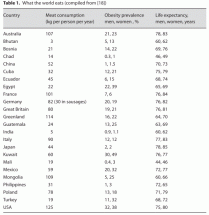
Table 1. What the world eats (compiled from)
Table 1 outlines meat consumption, prevalence of obesity, and life expectancy for 24 different countries.
Patients with mental disorders such as schizophrenia may make poor dietary choices. In patients with an increased risk for central adiposity to begin with, this combination of poor diet and lack of physical activity is particularly problematic.
Psychotropic medications such as antipsychotics, antidepressants, and anticonvulsants, have been associated with weight gain. It is not uncommon for these medications to be used in combination.
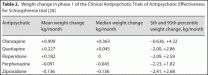
Table 2. Weight change in phase 1 of the Clinical Antipsychotic Trials of Antipsychotic Effectiveness for Schizophrenia trial
Possible mechanisms for medication-associated weight gain include weight loss before drug treatment, food craving, alteration in resting metabolic rate, sedation/decreased physical activity, change in neurotransmitters (in general, alpha-adrenergic neurotransmission is thought to stimulate appetite, whereas beta-adrenergic, histaminergic, dopaminergic, and serotoninergic signal transduction confers satiety) and alteration of neuropeptides such as leptin and cytokines such as tumor necrosis factor.
{pagebreak}
Second-Generation Antipsychotics
Second-generation antipsychotics are a major source of concern regarding weight gain. Attempts have been made to identify specific receptor-binding profiles of antipsychotics to aid in the prediction of propensity for weight gain, however there is much individual variation, and most of the information available at present comes from clinical observations. In a comprehensive meta-analysis of weight change after 10 weeks of treatment at a standard dose of antipsychotics, mean increases in body weight were calculated for the different medications. Clozapine and olanzapine had the largest weight gains with 4.45 and 4.15 kg, respectively. Risperidone was associated with a more modest 2.10 kg gain. Ziprasidone appeared essentially weight neutral with a mean gain of 0.04 kg. Insufficient data were available to evaluate quetiapine at 10 weeks, but subsequent studies have indicated that quetiapine also has a moderate to high propensity toward gain, particularly over the long term, as demonstrated in a prospective, naturalistic study. Aripiprazole, the newest second-generation antipsychotic medication to become commercially available, is generally considered to be weight neutral.
Examining mean weight change as observed in clinical trials is not always informative as to how often this actually will be encountered in clinical practice. There is large individual variability regarding weight gain, even with agents commonly thought of as being inexorably tied to obesity. In the CATIE study weight change per month of antipsychotic treatment was reported both in terms of mean change and in terms of median and range. Table 2 demonstrates that although mean weight change followed the expected pattern, some patients randomized to olanzapine lost 0.64 kg per month, and some gained 4.3 kg per month. Patients randomized to weight neutral medications still show variability in weight change, with some patients randomized to ziprasidone losing 2.4 kg per month and others gaining 2.7 lb per month. Weight gain greater than 7% from baseline to last observation occurred among 30% of the patients randomized to olanzapine, 16% for quetiapine, 14% for risperidone, 12% for perphenazine, and 7% for ziprasidone. Number needed to treat (NNT) to encounter one additional case of weight gain greater than 7% when using olanzapine versus perphenazine (a first-generation antipsychotic) was 6, versus quetiapine 8, versus risperidone 7, and versus ziprasidone 5. This means for every 5 patients randomized to olanzapine instead of ziprasidone, there was one additional case of a patient on olanzapine gaining greater than 7% of their initial body weight. Keeping in mind patients randomized to olanzapine had a longer mean time on medication than the other antipsychotics, and thus had a greater opportunity to accumulate weight, these single-digit NNTs nevertheless represent clinically significant differences.
{embed="ref/57"}
Switching antipsychotics can lead to weight loss. Ultimately, there will need to be a favorable balance of benefit to risk. Deciding whether to continue treatment with a particular antipsychotic or switch the patient to another can pose substantial dilemmas for the clinician. The choice to 'switch or stay' is a highly individualized decision.
Evidence-based medicine philosophy states that relevant clinical trials can inform the clinician in making thoughtful individualized treatment decisions but there are no guarantees of weight gain or loss or drug efficacy. With these caveats, consideration should be given to switching to a more weight-neutral medication when encountering rapid weight gain with a particular antipsychotic. For example, in the CATIE study, of 61 patients who gained over 7% of their body weight in phase 1, 42% of ziprasidone-treated patients, 20% of risperidone-treated patients, 7% of quetiapine-treated patients, and 0% of olanzapine-treated patients lost over 7% of their body weight during phase 2. The NNT to encounter one additional case of weight loss greater than 7% when using ziprasidone versus olanzapine or quetiapine was 3, and versus risperidone 5. The findings from CATIE are consistent with earlier reports from open-label studies, such as a post-hoc analysis of a 20-week study where switching from olanzapine to risperidone resulted in a reduction of prevalence of metabolic syndrome in overweight or obese patients, including reductions in body weight and BMI.
In another report of 3 studies in which outpatients experiencing were switched to 6 weeks of open-label ziprasidone, patients switched from olanzapine experienced a mean weight loss of 1.76 kg, those switched from risperidone had a lesser reduction in weight (–0.86 kg), and those switched from first-generation antipsychotics had a non-significant increase (+0.27 kg). In an 8-week study where patients were switched from other antipsychotics to open-label aripiprazole (92% were receiving olanzapine or risperidone prior to the switch), the mean weight loss from baseline ranged from 1.3 kg to 1.7 kg, the incidence of weight loss of at least 7% of total body weight ranged from 7% to 15%, and the incidence of weight gain of at least 7% of total body weight ranged from 3% to 5%, depending on the switching technique.
Early weight gain may be predictive of future substantial weight gain. One can use the time course for weight gain with olanzapine for early identification of those at risk before substantial weight gain has occurred. Patients taking olanzapine who gain 5% or more of their body weight within the first 4–12 weeks of treatment and who are going to remain on olanzapine will require more active behavioral and/or pharmacologic interventions than patients who gain weight more slowly or not at all. Although weight gain may plateau after 40 weeks or so, by that time one-half of patients receiving olanzapine will have gained up to 10 kg, and some substantially more than that. The pattern of weight gain with quetiapine is also consistent with the idea that it can occur early (within 12 weeks). Within the approved range, antipsychotic dose does not appear to be predictive of weight gain for olanzapine but there may be differences at higher-than-approved doses. For risperidone, in a short (6-week) trial, higher doses were associated with more weight gain. Data regarding a dose relationship with weight gain with quetiapine is conflicting.
Low initial BMI (< 25) may be a predictor of some future weight gain in some patients with any of the second-generation antipsychotic medications.
Children and adolescents, and patients in their first episode of psychosis may be at heightened risk for weight gain with antipsychotic medication. In a 52-week randomized double-blind clinical trial in patients early in their course of psychotic illness, 80% of patients in the olanzapine group, 50% in the quetiapine group, and 58% in the risperidone group, gained at least 7% of their baseline weight at week 52. Similarly, in the 1-year European First-Episode Schizophrenia Trial, weight gain greater than 7% from baseline was observed in 86% of the patients randomized to olanzapine, 65% for those on quetiapine, 37% for those on ziprasidone, and 53% for those on haloperidol. Amisulpride, an antipsychotic not commercialized in the USA, was associated with a rate of 63% on this outcome.
Monitoring of patients receiving psychotropic medications for weight and metabolic parameters is crucial. The report from the Consensus Development Conference on Antipsychotic Drugs and Obesity and Diabetes Consensus Panel contains valuable advice for appropriate and prudent monitoring. The most frequently assessed parameter in the recommendations is weight. At a minimum it is obtained at baseline, monthly for the first 3 months, and then quarterly. However, monitoring weight at each and every patient visit will allow the clinician to catch a problem early, before substantial weight gain has set in, and underscore to both the patient and the clinician the importance of physical fitness. Additionally, patients and/or caregivers can be educated about monitoring weight and report back to the clinician.
Leslie Citromea Betty Vreelandb
New York University School of Medicine, Department of Psychiatry, and the Nathan S. Kline Institute for Psychiatric Research, Orangeburg, N.Y.;
University Behavioral HealthCare, the School of Nursing, and the Departments of Psychiatry and Family Medicine, Robert Wood Johnson Medical School, University of Medicine and Dentistry of New Jersey, Piscataway, N.J., USA

 News
 News
 News