
Myths and facts about Eating Disorders
Key points
- Although scientists have found clues as to why eating disorders arise, there are no definitive answers.
- Mainstream American culture exerts relentless pressure on girls to be thin.
- In their efforts to find the causes of eating disorders, scientists search for risk factors; that is, they identify what increases the likelihood that an individual will develop an illness.
- Second, knowing that eating disorders stem from many factors will give you an increased understanding of your child's treatment program and help you support her on her road to recovery.
"Why does my child have an eating disorder? Why did this happen? Is it my fault?" Although scientists have found clues as to why eating disorders arise, there are no definitive answers. What we do know is that no single influence is responsible for the development of these conditions. In all likelihood, a number of determinants play a role. As shown in Figure 10.1, the challenge facing researchers is to examine the pieces of the puzzle to discover how they fit together.
In their efforts to find the causes of eating disorders, scientists search for risk factors; that is, they identify what increases the likelihood that an individual will develop an illness. Who is vulnerable? What characteristics do individuals with eating disorders share that set them apart from those who don't develop these conditions? Learning about the possible roots of eating disorders will help you in a couple of ways. First, by appreciating how complex these illnesses are, you can begin to see that no one is to blame.
Second, knowing that eating disorders stem from many factors will give you an increased understanding of your child's treatment program and help you support her on her road to recovery.
Culture and Eating Disorders
Mainstream American culture exerts relentless pressure on girls to be thin. Billboards, subway ads, magazines, films, TV, and the Internet promise that thinness leads to romance, success, and a lifetime of happiness. The notion that body size produces these rewards is an illusion-a powerful one-that exploits girls from a very early age and strikes them with full force during the years when they are insecure about growing up and therefore vulnerable to believing harmful definitions of womanhood (such as "You are what you weigh," or "Thinness equals fulfillment").
Sophisticated advertising strategies lead many viewers to feel negatively about their bodies and to think that changing themselves to look a certain way-which inevitably means buying a certain product-will solve their problems and allow them to live happily ever after.
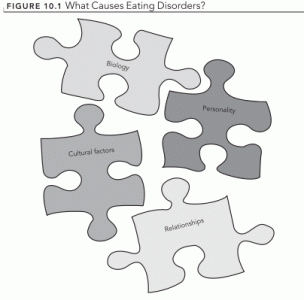
FIGURE 10.1 What Causes Eating Disorders?
Though dieting is not synonymous with an eating disorder, it can increase a person's chance of developing one. The ultrathin body ideal espoused by Western culture is unattainable for the vast majority of girls. Yet young women are a captive audience for the supermodels who fill the pages of fashion and beauty magazines.
As girls approach puberty, they naturally and appropriately gain weight and take an increased interest in their looks-for some, looking at fashion magazines is a way to express this interest and find people to model themselves after. These sylphlike images are not real; they're created, largely through the use of technology, to convince girls that thinness confers a perfect life. In comparison to such figures, a young person tends to experience her own body as "not thin enough," a perception that can help fuel her development of unhealthy weight-loss practices (food restriction, binge eating, and purging). Often, a girl who is dissatisfied with her body will also dislike herself in other ways; perhaps, for example, she senses that she is less intelligent, less likable, or less athletic than she wants to be. Research has found that up to half of middle and high school girls associated their desire to lose weight with magazine images; the large majority of these girls said that pictures of models inform their idea of a perfect body.
Written and revised by
Andrey Nailor, M.D.
Our doctors write and review articles for accuracy and keep them up to date.
health.am provides general information, not medical advice. Always consult a qualified health professional about your own health.
Explore health topics
More in this topic
Mental Health → Guide
Eating Disorders Run in Families: Yvette's Story
Yvette, 47, an acclaimed long-distance runner, relates her eating disorder, which struck as a college senior and lasted 10 years, to her determination to run the perfect marathon. Coached to discipline herself and train…
28 April 2011
 Guide
Myths and facts about Alcoholism
Myth: Addiction is a voluntary disorder. Fact: Alcoholism is highly genetic. Alcoholics have to drink to feel normal. Myth: Treatment doesn't work. Fact: Ninety percent of patients who work the program stay clean and…
16 April 2011
 News
Eating disorders and body dissatisfaction is double in Muslim teenagers than in Christian
The incidence of eating disorders was found to be 2.3-fold higher among Muslim adolescents than among their Christian classmates. Similarly, body dissatisfaction was 1.8-fold higher in the former group. Finally, as a…





