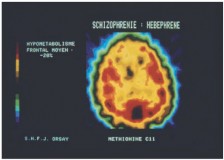
Brain Differences in schizophrenia
Key points
- In the past, researchers could only examine the brain after a patient died.
- In addition, most schizophrenia patients take medication, which may also play a role in changing the way the brain looks and works.
- Deep within the brain are fluid-filled spaces called ventricles.
- If one's ventricles are large compared to what is normal for a brain of a particular size, that means that there is less functional brain tissue.
In the past, researchers could only examine the brain after a patient died. Now, there is technology that allows researchers to examine the brains of living people. New techniques, including magnetic resonance imaging (MRI), are rapidly advancing our knowledge about the brain and schizophrenia. Still, there are several challenges to studying brain structure and function in relation to a major mental illness. One such challenge includes figuring out whether differences in the brain were present before the illness and thus part of the cause, or if they are the result of symptoms.
In addition, most schizophrenia patients take medication, which may also play a role in changing the way the brain looks and works. There are many diseases that affect the brain and may cause or result from brain abnormalities. All the brain differences you will read about can also be found in individuals without schizophrenia. This means that, to date, there are no brain abnormalities that specifically distinguish schizophrenia patients from normal, healthy people.
Deep within the brain are fluid-filled spaces called ventricles. Several studies have shown that relative to individuals without schizophrenia, schizophrenia patients have enlarged ventricles.
If one's ventricles are large compared to what is normal for a brain of a particular size, that means that there is less functional brain tissue. Enlarged ventricles are not unique to schizophrenia and are associated with several other disorders of the brain, including Alzheimer's disease and chronic alcohol use. Other studies using MRI support the theory that schizophrenia patients have less working brain tissue. Studies have shown that there is a 3 percent reduction in brain volume in schizophrenia patients relative to normal, healthy study participants. This lower brain volume has been identified early in the schizophrenic illness, thus suggesting that this general brain abnormality may come before the illness rather than resulting from repeated psychotic episodes or medication taken to treat symptoms of schizophrenia.

Figure 4.1 This graphic shows the results of a 2004 study examining the risk of schizophrenia for children with prenatal exposure to influenza.
© AP Images
Although several parts of the brain have been found to be different in schizophrenia patients, two areas have received the most clinical attention. The first are the frontal lobes of the brain, which are the areas directly behind the forehead that are responsible for planning and problem solving. This area is among the last to completely mature in normal individuals.
Problems in frontal lobe functioning may appear as difficulties in concentration and attention. Many schizophrenia patients appear to have these problems. One task by which researchers can study frontal lobe function is called the Wisconsin Card Sort Test (WCST). In the WCST, participants are asked to look at cards and sort them according to color, shape, or number. The test administrator will not tell the participant the rule by which they should sort but will tell the participant if they are sorting correctly. Someone without frontal lobe damage will try to sort according to one rule, perhaps number, but will change to shape or color until the administrator tells them they are correct. After the participant sorts a few cards, the test administrator changes the rule and now the participant must try to figure out the new rule. Most people have no problem with this task. They will change from number to color or shape until the administrator tells them they are correct. But for someone with schizophrenia or another form of frontal lobe damage, the rule change can present a real challenge. These patients might keep sorting the cards according to the old rule, a process called perseveration.
Written and revised by
Gerald Hurowitz, M.D.
Our doctors write and review articles for accuracy and keep them up to date.
health.am provides general information, not medical advice. Always consult a qualified health professional about your own health.
Explore health topics
More in this topic
Mental Health → News
Scientists Afflict Computers with Schizophrenia to Better Understand the Human Brain
Computer networks that can’t forget fast enough can show symptoms of a kind of virtual schizophrenia, giving researchers further clues to the inner workings of schizophrenic brains, researchers at The University of…
6 May 2011
 News
Antipsychotics for Schizophrenia Associated With Subtle Loss in Brain Volume
Patients with schizophrenia who take antipsychotic medications appear to lose a small but measurable amount of brain tissue over time, according to a report in the February issue of Archives of General Psychiatry, one…
8 February 2011
 News
Gender differences in schizophrenia
Sex differences in schizophrenia can be caused by the disease process itself, by genetic and hormonal differences, by differences in the maturation and morphology of the brain and in age- and gender-specific behavioural…